 Baodie
1 / 1
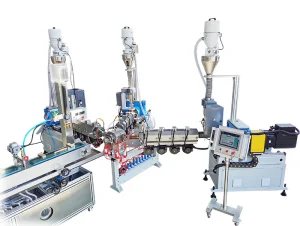
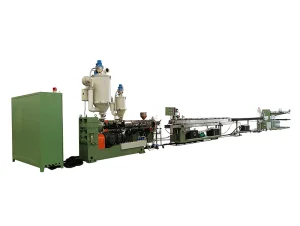
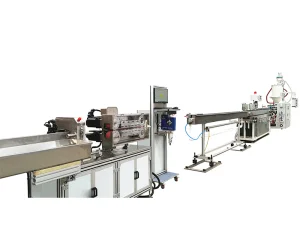
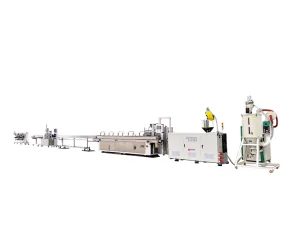
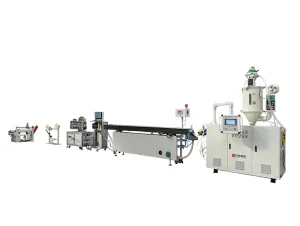
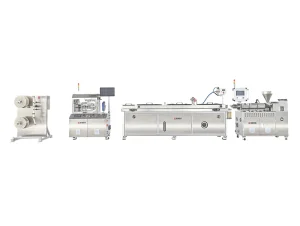
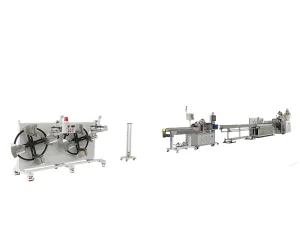
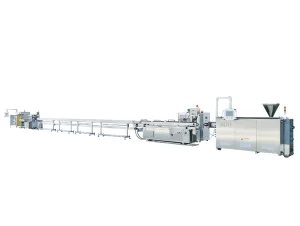
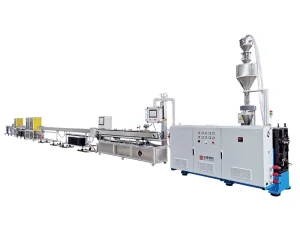
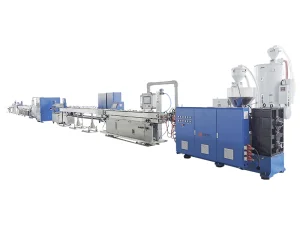
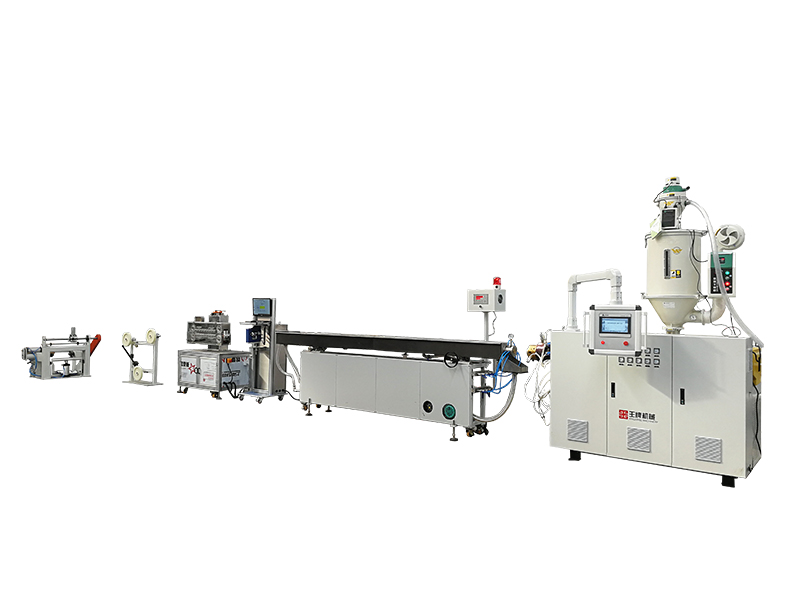
The barrel and screw of extruder adopt new #3 mold steel material, with good corrosion resistance and high temperature resistant, can meet fluorine plastic extrusion plasticizing processing.
The heating of the barrel is made of copper or cast steel heater, can meet the stable production of the highest processing temperature 500 ℃.
The die adopts advanced CNC processing technology and electrochemical machining method for the precision processing, meet a diameter range ≤1.0mm catheter ideal forming.
Mold material is also new #3 mold steel, with good corrosion resistance and high temperature resistant performance.
Adopting the new concept "weak vacuum forming" technology: vacuum and water system separately control, through the multi-stage water balance control system and vacuum system unified coordination to ensure the production process is vacuum stable, cooling water surface smooth and flow stable.
Vacuum control uses a more precise way, can achieve control accuracy of -0.01KPa level.
Different fluorine plastics have different processing temperature, melt viscosity, liquidity and so on, the corresponding calibration means also have a great variety: vacuum dry calibration, vacuum immersion bath calibration, internal pressure calibration and the other different ways.
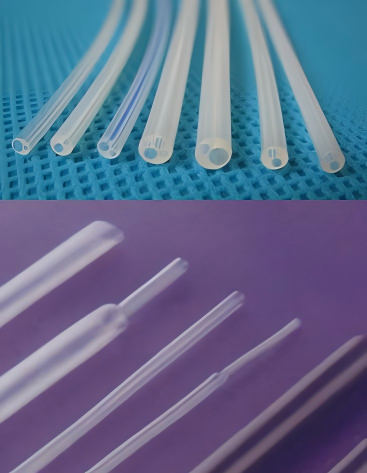
The barrel and screw of the extruder are built using a new #3 mold steel material. This ensures excellent corrosion resistance and high-temperature tolerance, making it ideal for processing fluorine plastics.
The heating system utilizes copper or cast steel heaters, which can support stable production processes at temperatures reaching up to 500 ℃.
By utilizing advanced CNC processing technology and electrochemical machining methods, the die delivers high-precision forming suitable for catheters with a diameter range of ≤1.0mm.
This technology controls the vacuum and water systems independently. It coordinates them through a multi-stage water balance control system to ensure a stable vacuum, smooth cooling water surface, and steady flow during production.
The system utilizes highly precise control methods capable of achieving a fine control accuracy down to the -0.01KPa level.
Since different fluorine plastics vary in processing temperature, viscosity, and liquidity, the system supports multiple calibration methods, including vacuum dry calibration, vacuum immersion bath calibration, and internal pressure calibration.