Optimized for structural integrity, dimensional stability, and multi-polymer flexibility, targeting Northern Germany's engineering benchmarks.
As Northern Germany's primary industrial and logistics hub, the Hamburg metropolitan region represents a highly sophisticated ecosystem for high-performance polymer extrusion technologies. The demand for plastic tubing is driven by Hamburg's core industries: aerospace manufacturing (centered around Airbus Finkenwerder), medical device clusters in the Hamburg-Schleswig-Holstein "Life Science Nord" alliance, marine engineering in the Port of Hamburg, and automotive tier suppliers supplying plants across Northern Germany.
To operate successfully in this market, factories must deliver technology that achieves extreme dimensional tolerances, typically within ±0.02mm to ±0.05mm. These exact tolerances are crucial for automotive fluid systems, where multilayer polyamide (PA) tubes prevent fuel permeation, and medical catheters, where consistent lumen geometry is vital. Modern extrusion lines in Hamburg must integrate closed-loop gravimetric feeding, precise melt-pump regulation, and real-time laser diameter monitoring to meet strict European quality expectations.
German engineering standards dictate rigorous adherence to safety and performance criteria. Lines must conform to machinery directive 2006/42/EC and EN standards for electrical and mechanical safety.
Modern applications require co-extruding up to 5 layers, combining cost-effective structural polymers with functional inner-barrier layers such as EVOH, PVDF, and PTFE.
Founded in 2002, BAOD EXTRUSION is dedicated to designing, manufacturing, and selling high-performance plastic extrusion equipment. Relying on decades of experience in designing and fabricating high-quality machinery originating in Taiwan, our parent group (KINGSWEL GROUP) established our core production base in 1999. Since then, we have maintained a strict focus on the R&D of high-efficiency, automated, and safe extrusion solutions.
Our strategic developmental priority focuses on the German and broader European markets, ensuring that our systems deliver the thermal stability, energy efficiency, and control precision required by local operators.
How BAOD bridges localized supply chain advantages with German operational specifications and CE directives.
By leveraging China's dense manufacturing infrastructure, BAOD provides cost-competitive machinery designs with rapid component sourcing, ensuring minimal lead times for complex configurations.
Every system exported to the Hamburg market is manufactured to meet EN 60204-1 electrical regulations, including premium German-sourced electrical components (Siemens, ABB, Schneider) for local serviceability.
We work with regional service partners in Germany to facilitate onsite commissioning, operator training, mechanical calibration, and rapid supply of essential tooling and wear parts.
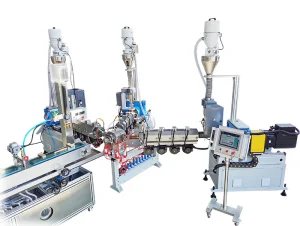
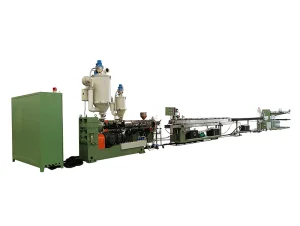
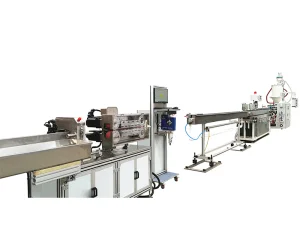
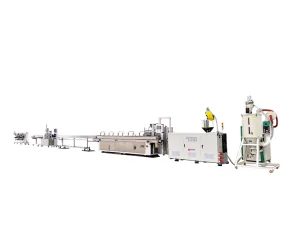
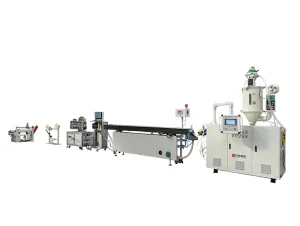
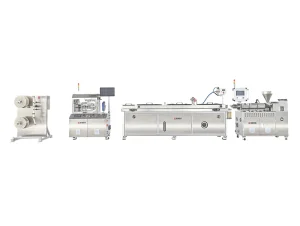
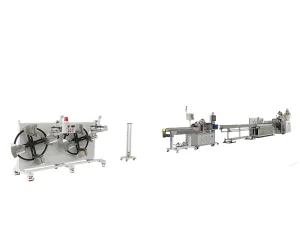
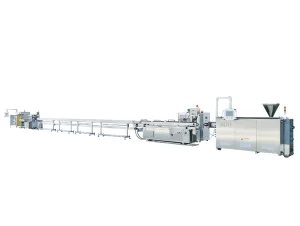
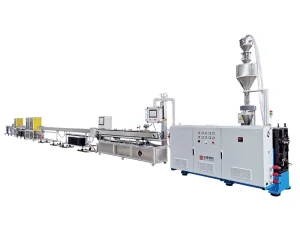
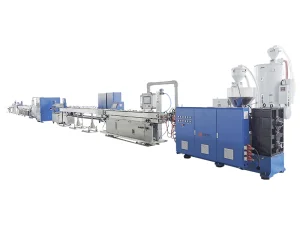
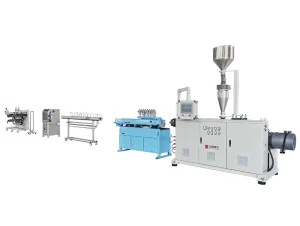
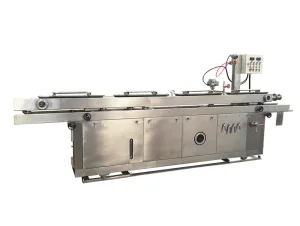
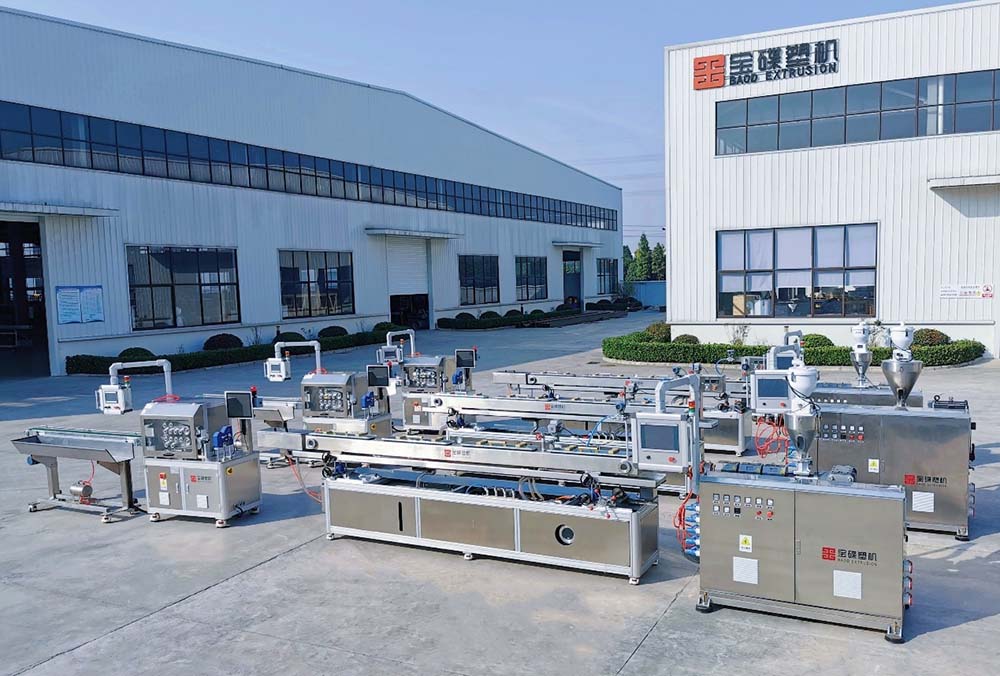
A comprehensive overview of our custom extrusion machinery designed for high reliability, precise automation, and specific material configurations.
Exploring the specific mechanisms, material constraints, and processing challenges encountered in precision extrusion.
Fluorinated polymers present challenging processing conditions due to high melt temperatures (often exceeding 350°C) and corrosive outgassing. BAOD addresses these challenges by employing specialized corrosion-resistant alloys for screws, barrels, and die heads, such as Hastelloy or Xaloy coatings.
For Hamburg's local chemical infrastructure and marine liquid transport systems, our fluorine plastic extrusion lines feature multi-zone ceramic heating bands, precise air-support control, and specialized high-drawdown tooling. This setup maintains consistent wall-thickness distribution even during thin-walled microduct runs.
Automotive engineering standards demand low-permeation fuel and vapor recovery lines. Multilayer co-extrusion allows PA11 or PA12 to be combined with inner barrier layers (like EVOH or fluoropolymers) using adhesive tie layers.
BAOD's co-extrusion technology uses a proprietary spiral mandrel die design. This ensures uniform melt distribution across all layers, preventing interface defects or layer separation during thermal cycling.
Medical applications demand strict hygiene and precise quality control. Extrusion lines used for medical-grade PVC, polyurethane, or PE-b-polyether (Pebax) must operate in cleanroom conditions, preventing external contamination.
BAOD systems address these needs through cleanroom-adapted designs, which feature:
Analyze how international machinery directives, raw-material developments, and smart manufacturing affect extrusion lines.
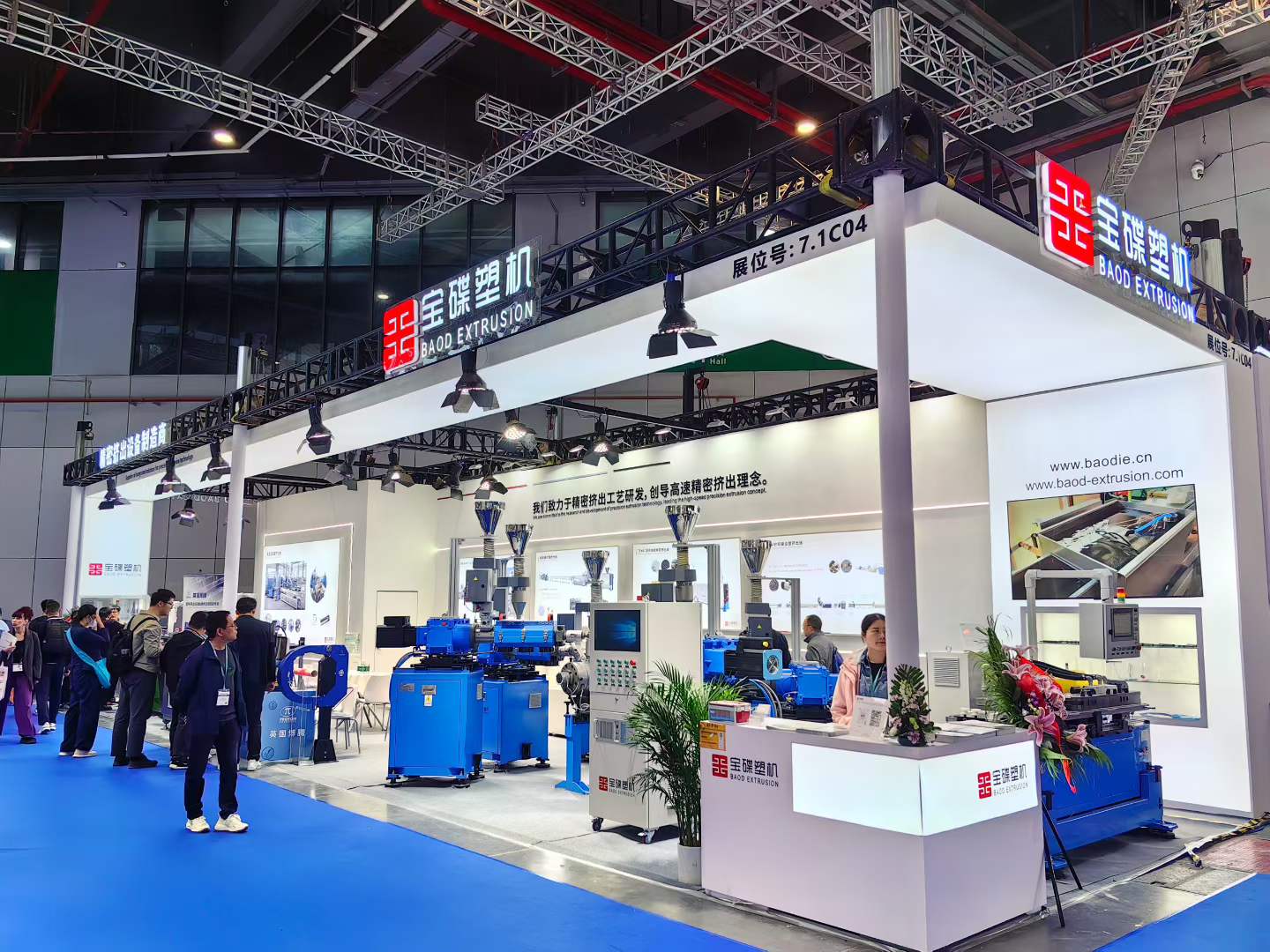
BAOD showcased its latest R&D achievements, presenting Smart Extrusion & High-Efficiency Innovation solutions for smart manufacturing environments.
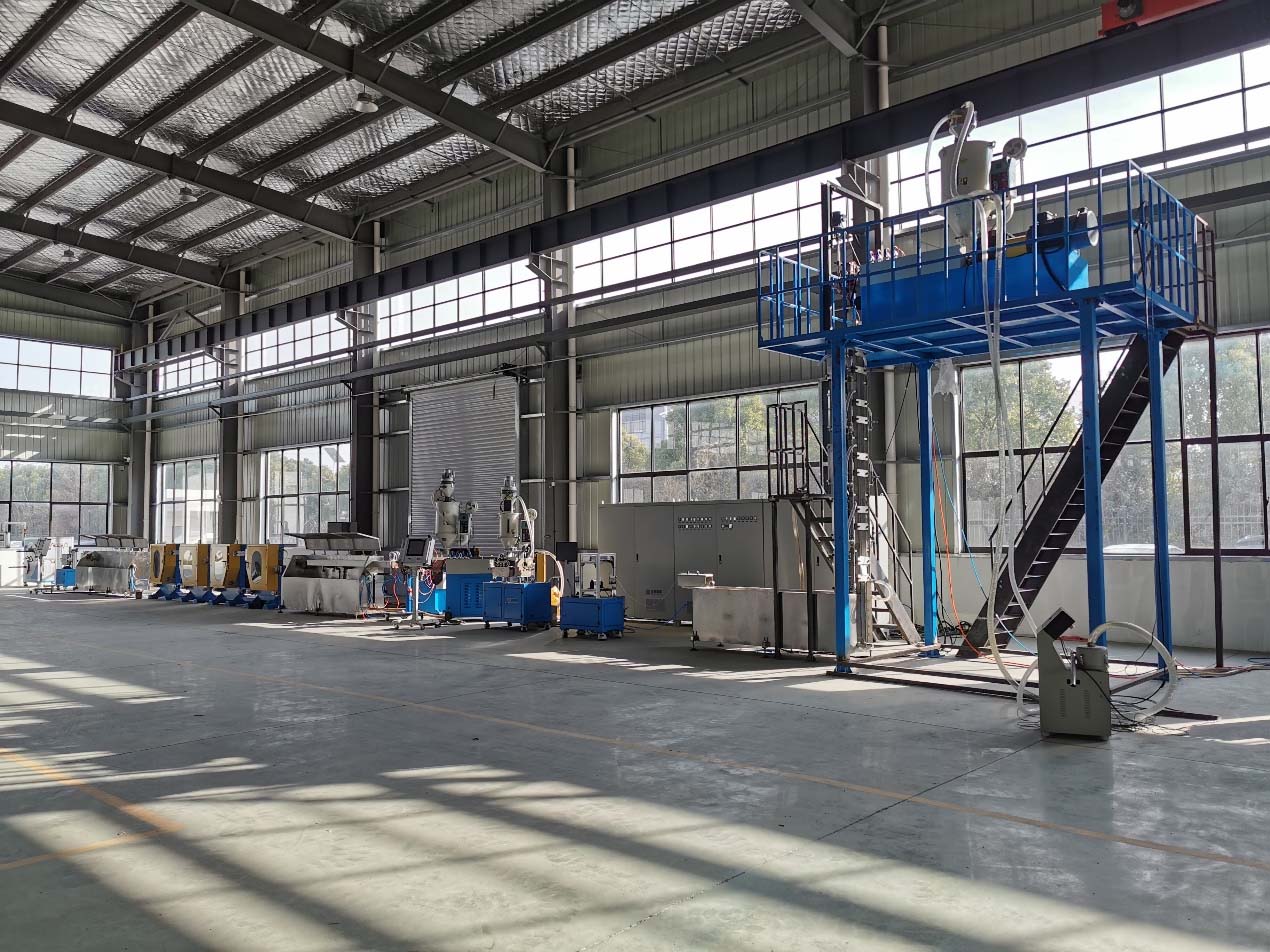
Evaluating safety and reliability requirements for processing specialized detonation shock-tubes used in demolition and structural excavation.
A technical comparison analyzing the mechanical precision, tooling design, and control systems needed to satisfy demanding EU medical directives.
Addressing compliance, technical configuration, delivery logistics, and service coordination for the Hamburg market.
A: All machines built for Germany and the wider European market comply with CE machinery, low voltage, and electromagnetic compatibility directives. We use components from European suppliers (e.g., Siemens PLC and HMI, Schneider low-voltage components, ABB or Yaskawa drives). Electrical cabinets are designed according to EN 60204-1 specifications, ensuring easy integration, inspection, and maintenance by local technicians.
A: Under stable running conditions, our precision extrusion lines can maintain a tube outer diameter (OD) and wall thickness tolerance within ±0.02mm to ±0.03mm. This precision is achieved through a closed-loop system that links continuous laser diameter gauges with the haul-off speed regulator and vacuum calibration pressure control.
A: Equipment is transported via direct maritime container freight from Shanghai Port to the Port of Hamburg. We provide detailed installation documentation, foundation plans, and electrical layouts beforehand. During commissioning, BAOD engineers or local European service partners manage assembly, wiring integration, and initial material testing at your facility.
A: Yes, we manufacture specialized extrusion lines for fluorinated polymers. These lines feature corrosion-resistant barrels and screws (using high-nickel alloys like Hastelloy or equivalent coatings) and precise temperature control systems capable of maintaining stable melt temperatures up to 400°C.
A: For multi-layer PA smooth or corrugated hoses (such as 3-layer or 5-layer structures), we design custom co-extrusion die heads with independent feed channels for each polymer melt flow. This setup ensures uniform layer distribution and prevents bonding defects between incompatible materials like EVOH and polyamides.
 Baodie