Explore our top-tier manufacturing systems engineered for high-speed output, precision calibration, and dynamic co-extrusion capabilities.
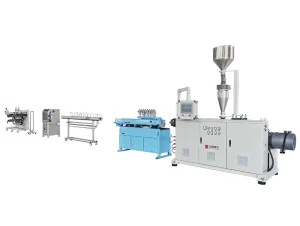
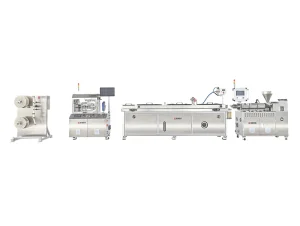
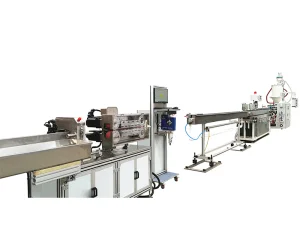
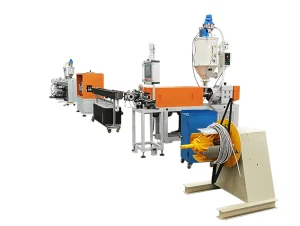
An authoritative breakdown of macro-market drivers, polymer chemistry processing challenges, and advanced engineering technologies.
In the modern industrial landscape, plastics processing technologies are moving beyond traditional methods toward high-efficiency, multi-material processing. The demand for flexible PVC corrugated tubes has surged globally. Today's applications require lines capable of producing tubes with high mechanical strength, chemical resistance, and thermal durability. These conduits secure delicate wire harnesses in automotive structures, house fiber optic lines, and transport fluids in medical environments.
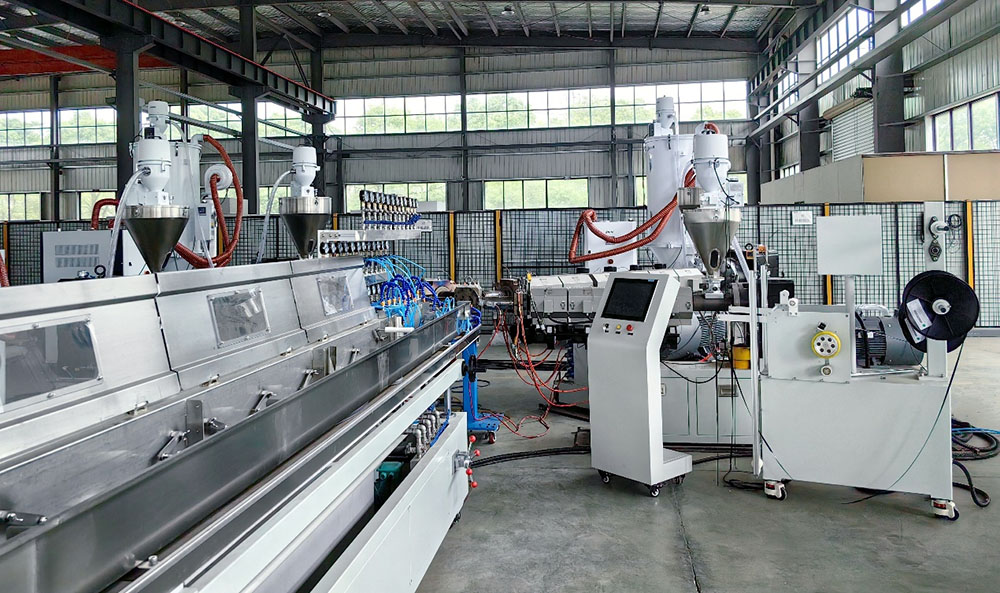
Leading manufacturing hubs are upgrading their facilities to integrate continuous extrusion techniques. By matching advanced extruder designs with smart corrugator mold blocks, modern plants can run continuously with minimal downtime. The key challenge lies in managing raw material formulations. Processing PVC requires precise temperature regulation to prevent thermal degradation while ensuring thorough material mixing. Chinese extrusion line manufacturers have positioned themselves at the forefront of this technology by engineering systems that blend high-speed output with strict compliance to international safety standards.
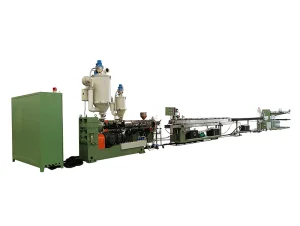
PVC (Polyvinyl Chloride) behaves differently under heat and shear compared to polyolefins like PE or PP. It has a narrow processing temperature window and high melt viscosity, meaning the design of the screw and barrel is critical. A high-quality extrusion line must feature custom L/D (Length-to-Diameter) screw ratios and precise barrel heating and cooling systems. This configuration ensures the polymer compound is fully melted without overheating the raw material.
Once the material leaves the die head, it enters the corrugating forming unit. Here, vacuum and pressure form the outer corrugated profile. The mold blocks must align and move with high precision. Any mismatch in block speed or alignment will cause uneven wall thickness, reducing the tube's crush resistance. Modern lines utilize closed-loop feedback systems to synchronize the extruder screw speed, corrugator speed, and puller speed, maintaining uniform wall distribution along the entire length of the tube.
Operating in international markets requires compliance with local regulations, including CE directives in Europe and UL/CSA electrical safety standards in North America. Modern extrusion lines are built with modular components that can be configured for different regional power supply requirements, such as 380V 50Hz or 460V 60Hz. They also feature local HMI languages to help operators run the machines safely and efficiently.
Energy efficiency is another major factor in modern extrusion design. Heating barrels and running high-speed vacuum motors consume significant electrical power. By utilizing energy-efficient AC motors, electromagnetic induction heating elements, and optimized cooling water loops, Chinese manufacturers have reduced total energy consumption per kilogram of processed material. These design choices lower operating costs and support manufacturers' sustainability goals.
Over two decades of engineering excellence in high-precision plastic extrusion systems.
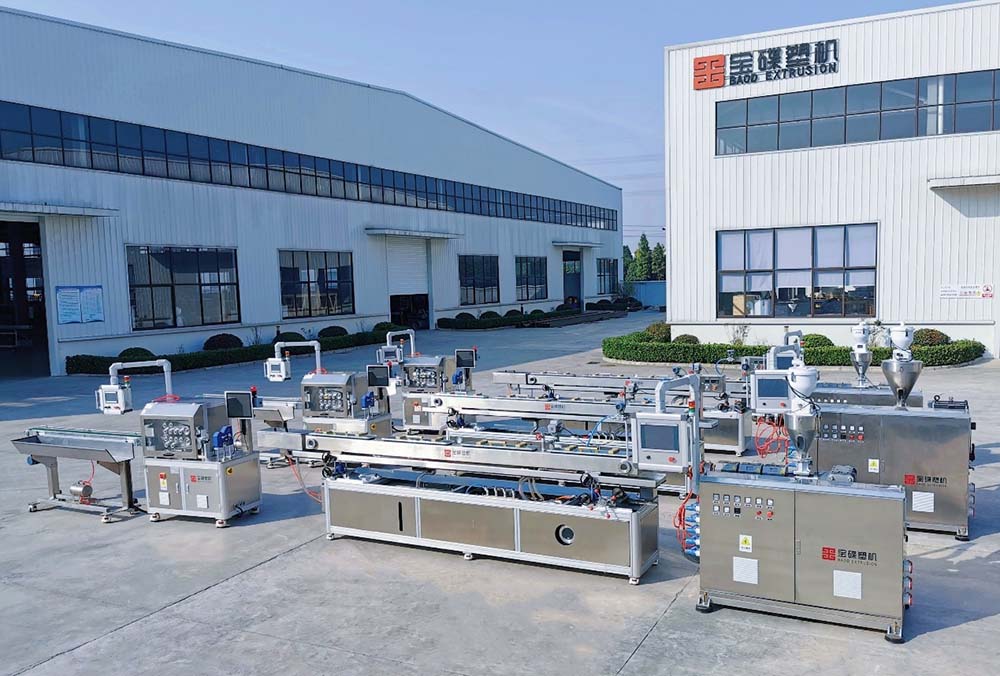
Established in 2002 under the BAOD EXTRUSION brand, we build on 18 years of design and manufacturing experience from our original Taiwanese parent company, KINGSWEL GROUP (founded in 1999). Over the years, we have grown into a leading developer of high-precision extrusion machinery.
Our engineering teams focus on four core areas: high-precision extrusion technology, high-speed output lines, process automation, and operator safety. This focus ensures our systems deliver consistent performance in demanding industrial environments.
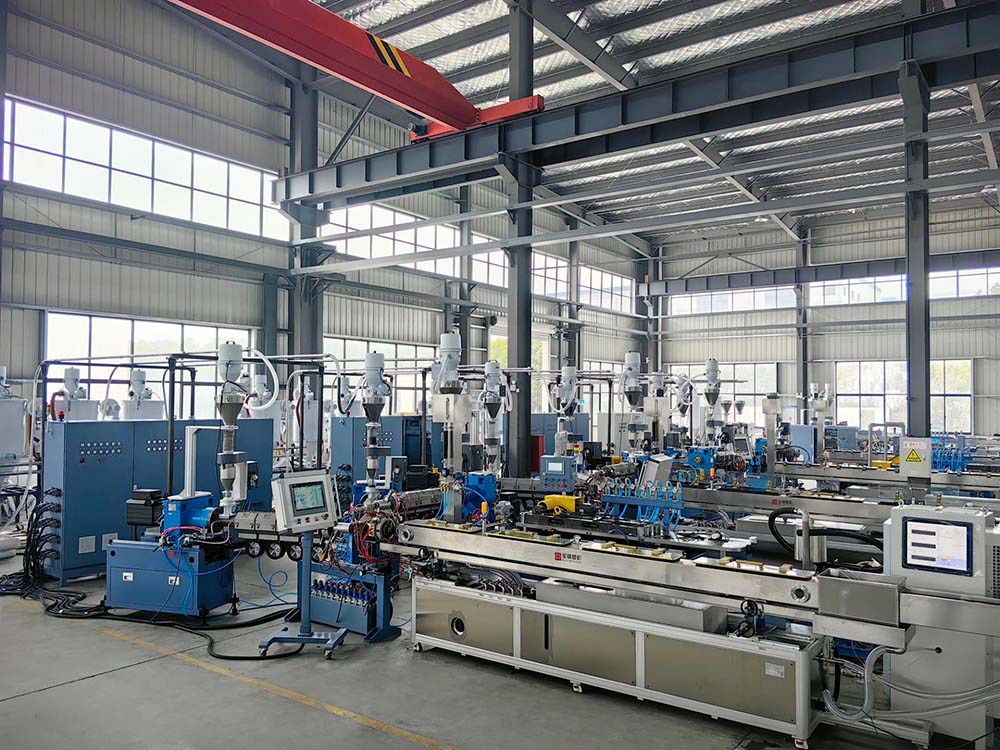
Operating from our 16,000 m² facility, our engineers design, assemble, and test every line to ensure compliance with global standards. We provide comprehensive documentation, wear-resistant components, and remote diagnostics support to keep your operations running smoothly.
How and where our precision PVC corrugated tubes are utilized across critical industry sectors.
Modern vehicles feature complex electrical networks. Lightweight, flexible single-wall corrugated tubes protect these wiring looms from engine heat, oil spills, and physical wear, ensuring reliable performance in both internal combustion engines and electric vehicles.
Medical applications require strict cleanroom manufacturing. Our precision PVC and polyurethane lines produce kink-resistant tubes used for anesthetic delivery, medical fluid transport, and respiratory equipment, meeting international healthcare standards.
In infrastructure projects, heavy-duty corrugated pipes act as protective pathways for underground fiber optic and electrical cables. These pipes protect lines from moisture, shifting soil, and rodent damage, ensuring reliable network connectivity.
Stay informed with the latest technological developments, exhibition showcases, and engineering articles from BAOD.
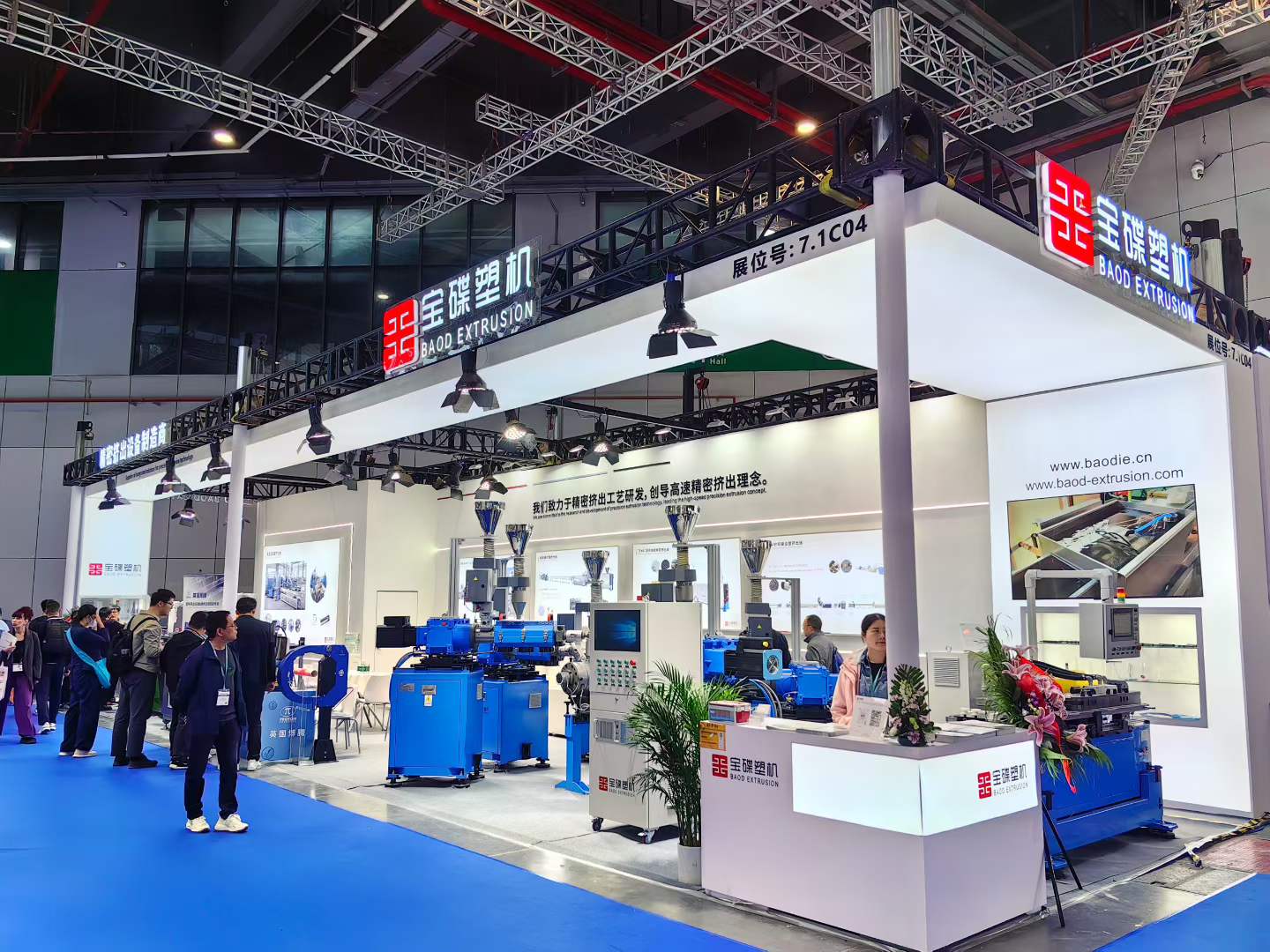
BAOD EXTRUSION demonstrated its latest smart extrusion systems at CHINAPLAS, showcasing advanced material processing technologies and automated control integrations.
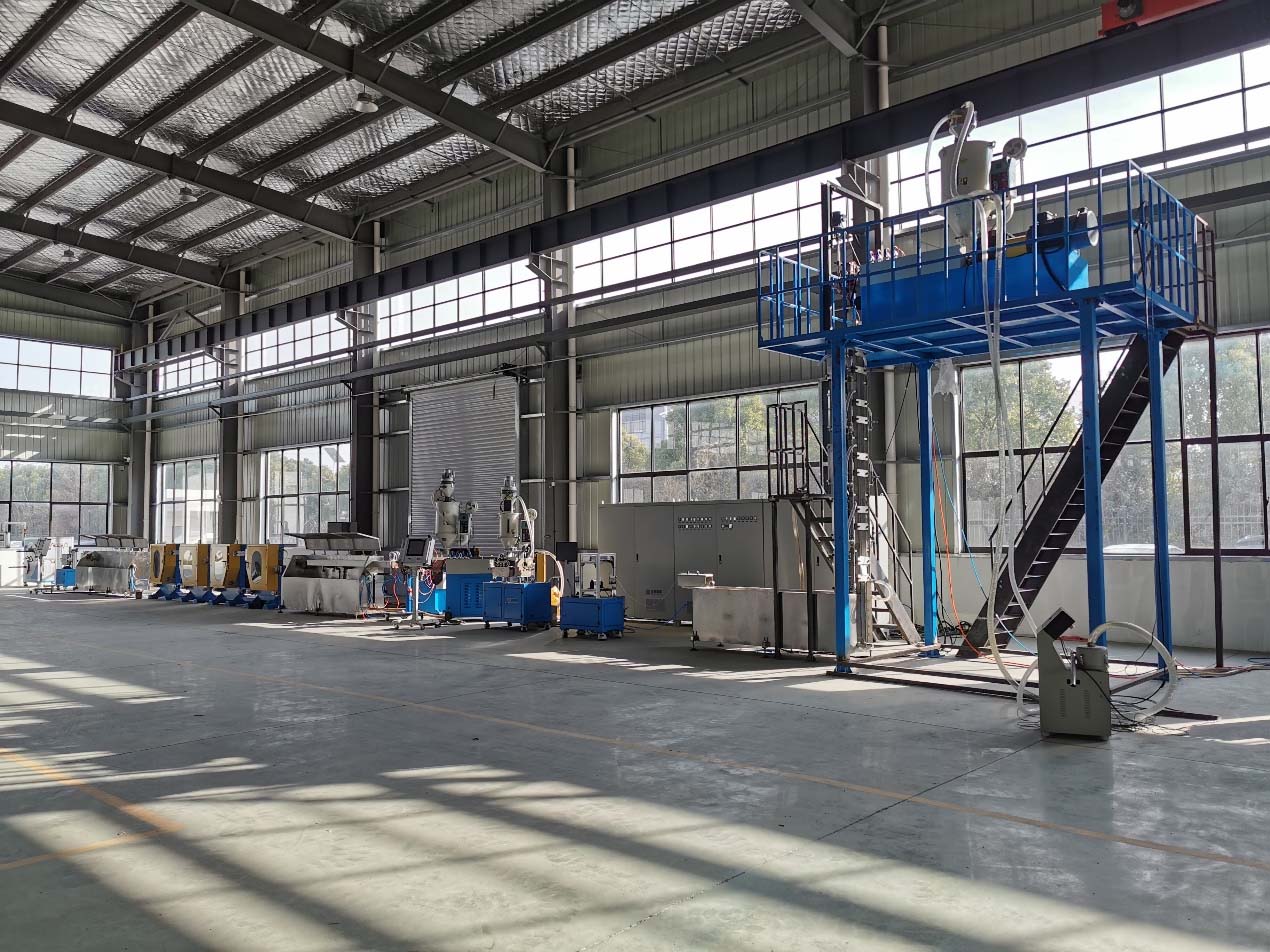
Our engineering team developed a specialized extrusion system for detonating tubes, designed to meet the high precision and safety standards required in commercial mining applications.
An in-depth look at how Chinese manufacturing processes align with European standards, focusing on die design, vacuum sizing, and multi-lumen wall thickness tolerances.
An overview of the quality control processes, documentation standards, and traceabilities required to supply critical automotive tube extrusion lines to Tier-1 suppliers.
Exploring the trends in vehicle weight reduction and electric vehicle NVH requirements, and how automated co-extrusion technology helps manufacturers meet these demands.
A look at the future of smart, sustainable polymer extrusion and the systems we are developing to support it.
Future extrusion systems will feature integrated laser measurement tools and ultrasonic wall-thickness monitors. These devices will provide real-time data to the PLC, allowing the machine to adjust speed and temperature automatically to maintain tight tolerances and minimize scrap material.
As environmental regulations tighten, extrusion lines must adapt to process higher percentages of recycled PVC and bio-based plastics. We are developing custom screw designs that prevent shear heat buildup and degradation when processing recycled formulations.
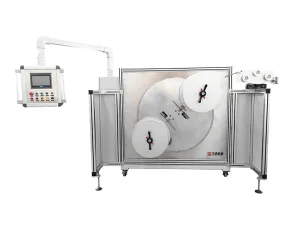
To reduce manual labor, we are integrating automatic high-speed coilers and packaging lines directly with the extrusion system. These setups use precise tension controls to wind flexible tubing without crushing or warping the profile, preparing it immediately for shipping.
Get answers to common technical, operational, and maintenance questions regarding PVC corrugated tube extrusion lines.
We use custom-designed screws with a specific L/D ratio that ensures gentle melting and mixing without creating excessive shear heat. We also equip the extruder barrel with high-accuracy heating bands and air-cooling systems to maintain temperature tolerances within ±1°C.
Vacuum forming draws the molten polymer tube outward against the mold blocks from the outside, which is ideal for small-diameter, thin-walled tubes requiring a precise outer finish. Pressure forming uses compressed air from inside the die head to push the polymer outward, making it suitable for larger, thicker-walled industrial conduits.
Our mold blocks are machined from high-grade aircraft aluminum or nitrided alloy steel. The surfaces are hard-anodized or chrome-plated to resist the corrosive effects of hydrochloric acid gas released by PVC during processing, ensuring a long service life.
We use a closed-loop control system that links the extruder screw, the corrugating machine, and the puller. If the line speed changes, the system automatically adjusts the melt pressure and screw speed, keeping the wall thickness consistent and reducing waste.
We use standard components from global brands like Siemens, Schneider, and Omron to ensure ease of maintenance worldwide. Our lines feature electrical overload protection, emergency stop circuits at every section, and fully enclosed safety guards around all rotating and high-temperature parts.
Yes. Our control systems can be equipped with secure VPN network modules, allowing our engineers in China to diagnose issues, update PLC programs, and help your onsite team troubleshoot problems remotely, minimizing unexpected downtime.
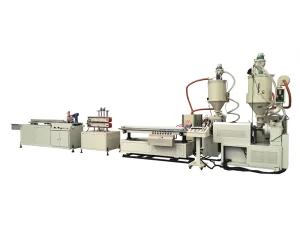
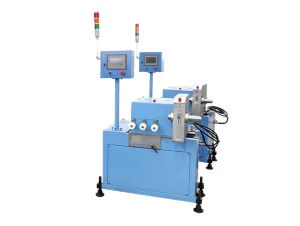
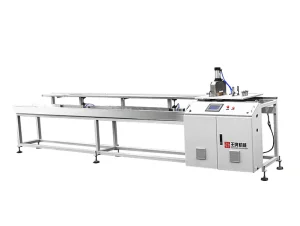
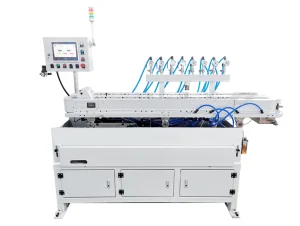
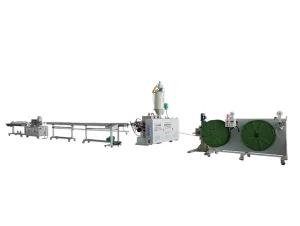
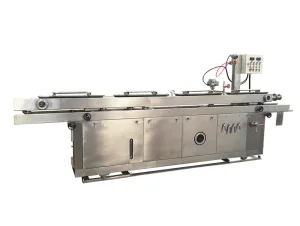
Explore our specialized downstream processing equipment, precision cutters, winders, and auxiliary units.
 Baodie