Modern industrial manufacturing has entered a phase of ultra-precision requirement. Plastic extrusion is no longer just about pushing molten polymers through a die. Today, the global commercial landscapes in automotive engineering, medical technologies, micro-electronics, and aerospace sectors demand customized types of extrusion processes that achieve micron-level dimensional stability, co-extrusion crossheads, and closed-loop process automation.
In the European Union and North American markets, stringent regulatory frameworks demand high thermal efficiency and reduced carbon footprints. Factories must move away from generic single-screw layouts to intelligent multi-layer co-extrusion setups that handle complex high-performance polymers like PEEK, PA12, TPU, and Fluoropolymers. These setups must deliver outstanding material integrity while minimizing waste. As the global supply chain transitions to lightweight electric vehicles (EVs) and minimally invasive medical interventions, the ability to control multi-channel tube dimensions and structural reinforcement is a critical asset.
Combining barrier performance with flexible structural support. Crucial for automotive fuel lines, where vapor permeation rates must comply with EV-grade environmental guidelines.
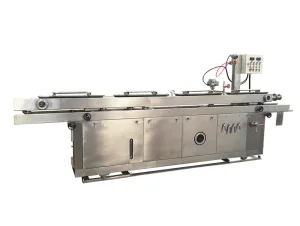
Stabilizing medical catheter tubes under precise temperature-controlled vacuum tanks, keeping ovality deviations below 0.02mm under high line-speeds.
Encapsulating high-tensile steel wire strands or metal corrugated pipes with durable engineering plastics (PA/PE/PVC) for high-load bridge systems and marine pipelines.
Configuring an extrusion line depends heavily on the polymer rheology, wall thickness requirements, and structural compositions. Jiangsu Baodie Automation Equipment Co., Ltd. builds specialized hardware configurations tailored to these specific variables:
Processes handling PA11, PA12, PEEK, or PVDF demand corrosion-resistant barrels and screws, high-wattage heating zones, and specialized crosshead designs. These setups prevent thermal degradation while ensuring uniform polymer melting.
Designed for multi-lumen medical tubes where multiple air-passages must be maintained during calibration. This setup requires precise air-pressure regulation valves and high-accuracy tooling to avoid wall-collapse.
Integrating synthetic fibers or metal wires between layers of thermoplastic (TPU/PVC/TPV) to achieve high pressure containment. The production line uses synchronized pay-offs, high-precision crossheads, and dynamic cooling lines.
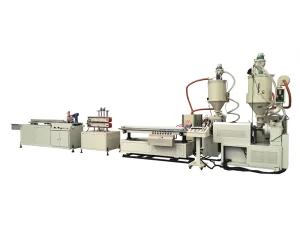
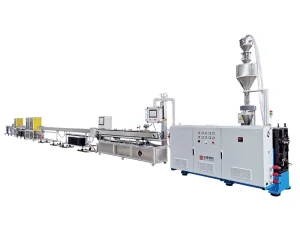
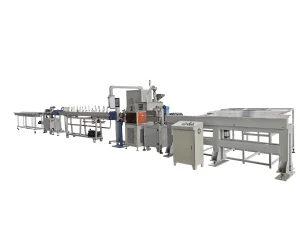
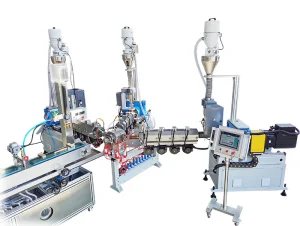
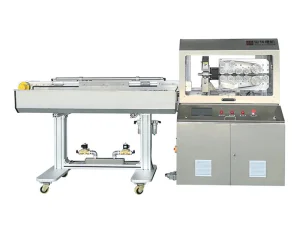
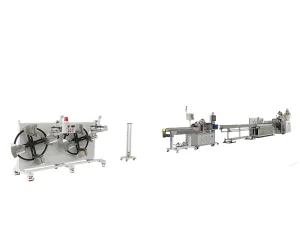
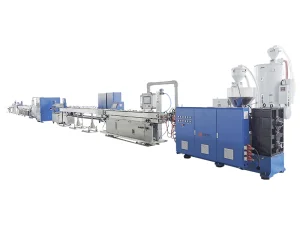
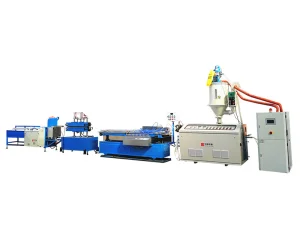
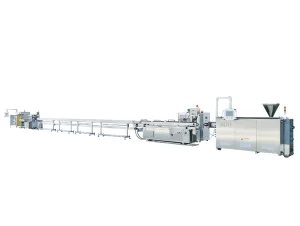
Every line features five primary components: raw material dosing/feeding systems, single/twin-screw extrusion units, calibrating and vacuum sizing tanks, pulling units, and cutoff systems. Below is a structural comparison mapping of processes:
| Extrusion Line Type | Standard Polymers | Vacuum Calibration Tech | Standard Dimensional Tolerance | Target Market Application |
|---|---|---|---|---|
| Precision Medical Tubing | PVC, TPU, Pebax | Auto-Vacuum Sizing (S.S 316) | ±0.01mm to ±0.03mm | Catheters, IV lines, Multi-Lumen Tubes |
| Multi-Layer Automotive Hose | PA11, PA12, TPV | Multi-stage Cooling / Corrugating | ±0.05mm | EV Cooling, Fuel Lines, Turbo Charger Hoses |
| Metal Pipe / Strand Coating | HDPE, PP, PA | Co-extrusion Crosshead Coating | ±0.10mm | Reinforcing chains, Offshore cables, Core pipes |
| Optical Lampshade Profile | PC, PMMA, PS | Dry Sizing Calibrators | ±0.08mm | LED lighting covers, diffuse profiles |
Founded in 2002, BAOD EXTRUSION (Jiangsu Baodie Automation Equipment Co., Ltd.) is dedicated to the design, manufacturing, and distribution of high-end plastic extrusion machinery.
Building on 18 years of experience designing and fabricating high-quality machinery in Taiwan, our original parent company, KINGSWEL GROUP, established our extrusion manufacturing base in Shanghai in 1999. Today, BAOD delivers world-class engineering solutions directly to global markets.
With a state-of-the-art 16,000m² manufacturing facility and more than 100 dedicated employees, our long-term research and development efforts focus on:
Our manufacturing philosophy centers on long-term reliability and heavy-duty frame designs. This focus minimizes vibration and eliminates mechanical deviations under continuous high-speed operation.
By integrating premium electric components (Siemens, Omron, ABB) and high-grade nitrided barrels and screws, BAOD lines deliver stable material output, minimal thermal fluctuations, and low maintenance overheads.
Operating an industrial production line requires strict adherence to safety, environmental, and material standards. BAOD EXTRUSION platforms are engineered to meet global compliance regulations, making them easy to integrate into international facilities.
For European manufacturers, our lines carry full CE Certifications, featuring isolated low-voltage control cabinets, emergency-stop integration, and safety guards with automatic power cutoffs. For US and Canadian customers, all motor drives and heating systems can be configured with UL/CSA-listed components. This configuration ensures smooth local validation and simplifies electrical inspections.
For cleanroom medical extrusion, our systems are built using stainless steel 316 sizing tanks and contact components. This setup prevents contamination and meets strict medical-grade manufacturing standards.
Our control software supports real-time parameter data logging (melt pressure, temperature, vacuum level, puller speed, line-outer diameter), aligning with modern automotive traceability requirements.
Every automated BAOD machine features an integrated industrial internet gateway. This allows our support team to troubleshoot, calibrate software, and update controls remotely, minimizing downtime.
Our ongoing research and development roadmap focuses on building self-optimizing extrusion systems that utilize real-time sensor feedback to adjust production parameters dynamically.
Integrating laser-gauge OD/ID measurement units with pulling systems. If a profile deviates by ±0.01mm, the system automatically adjusts the puller speed and vacuum pressure to correct it.
Vibration sensors on gearboxes and current-draw monitors on heating zones identify component wear before mechanical failures occur. This helps protect the screw and barrel assembly.
Refining co-extrusion crossheads to minimize wall thickness variations in multi-layer tubes (e.g. 5-layer automotive EV cooling pipes), helping to reduce material costs.
We combine high-stability, AC-servo-driven melt pumps with precision auto-vacuum calibration sizing tanks. This setup isolates raw material surge pulsations, keeping outer diameter tolerances within ±0.02mm under high line-speeds.
Specialty polymers like PVDF require longer L/D ratios (usually 28:1 to 32:1) and specialized screw flights. This design ensures complete, uniform melting without localized shearing. Overheating these materials can degrade the polymer and corrode the machinery.
Yes, our custom co-extrusion lines utilize specialized multi-manifold dies that handle polymers with different melting points. For example, we co-extrude PA and TPV for automotive lines using precise temperature control across each channel.
We provide custom die engineering, wear-resistant screw replacements, and hands-on commissioning support. Our remote diagnostics system allows us to support operators and troubleshoot control configurations worldwide.
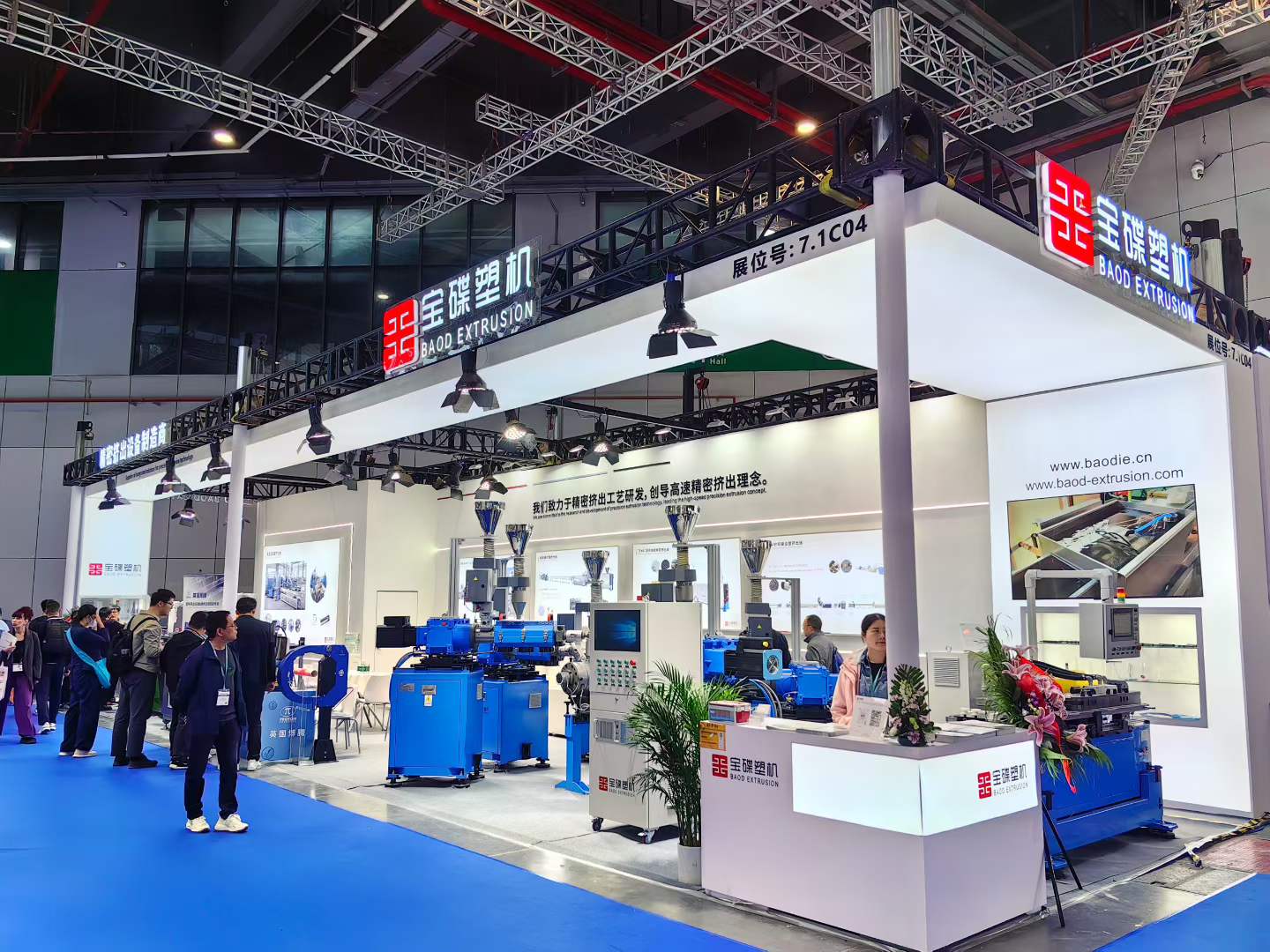
At Booth 7.1C04 in Hongqiao, Shanghai, BAOD EXTRUSION showcased its latest "Smart Extrusion & High-Efficiency Innovation" solutions. These systems attracted significant interest from international buyers focusing on modern industrial automation.
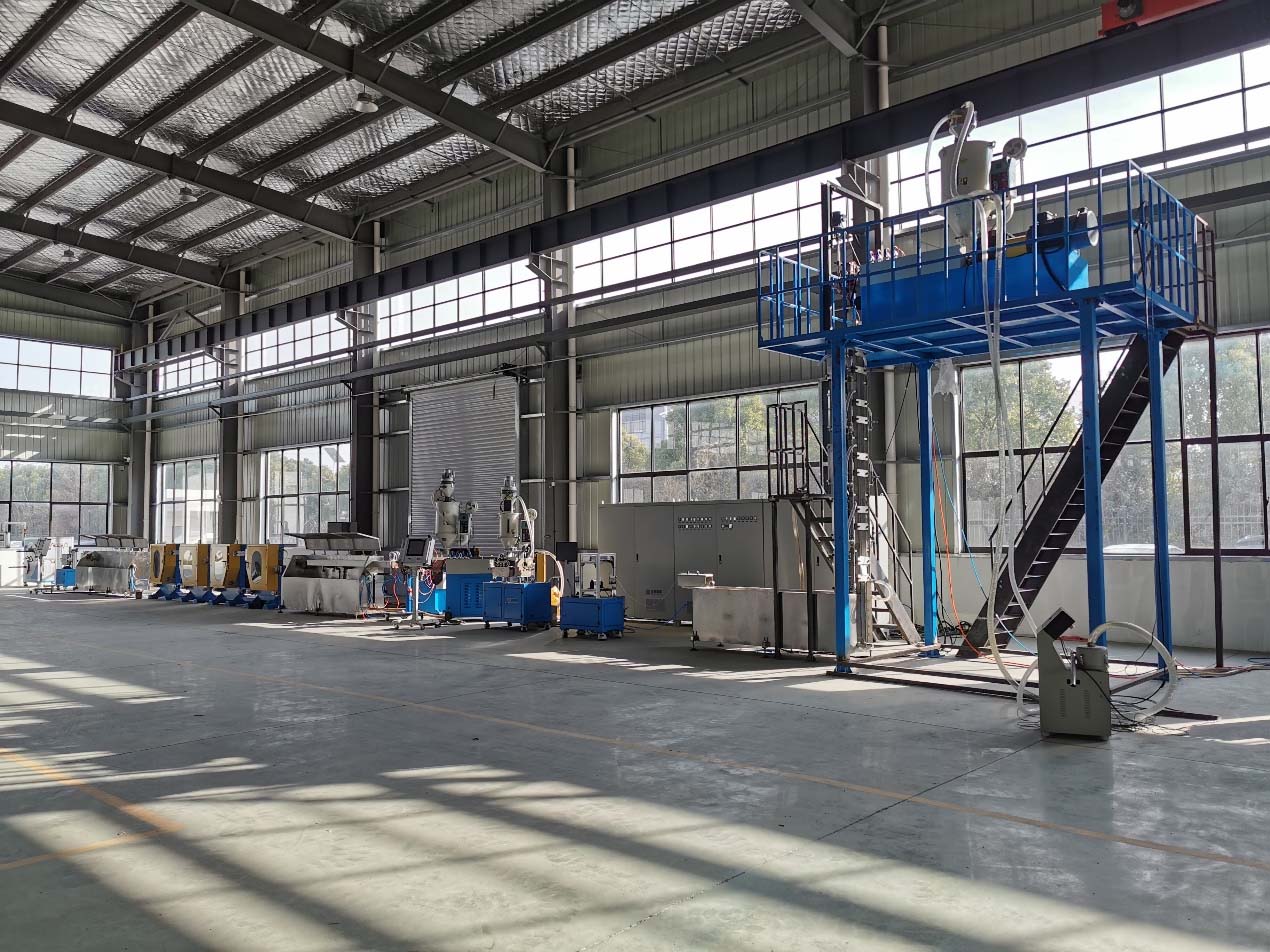
Delivering ultra-thin shock tubes for mining and quarrying applications requires exceptional precision. BAOD's high-speed lines provide consistent material density and precise outer diameter tolerances.
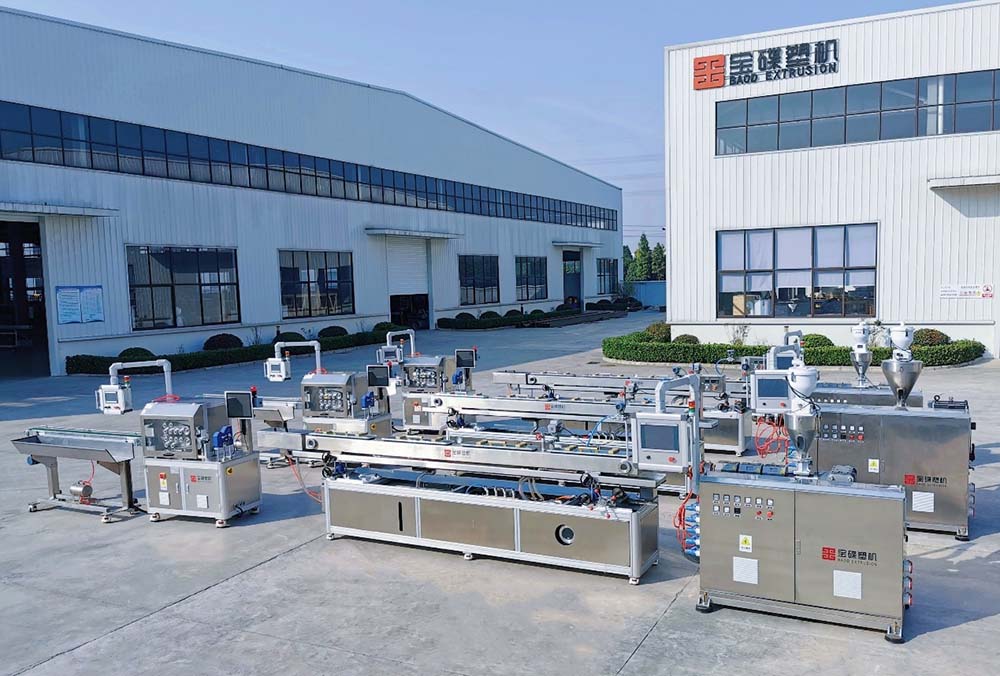
Comparing multi-channel medical tube tolerances. BAOD demonstrates how its vacuum calibration systems achieve tolerances that align with European cleanroom standards.
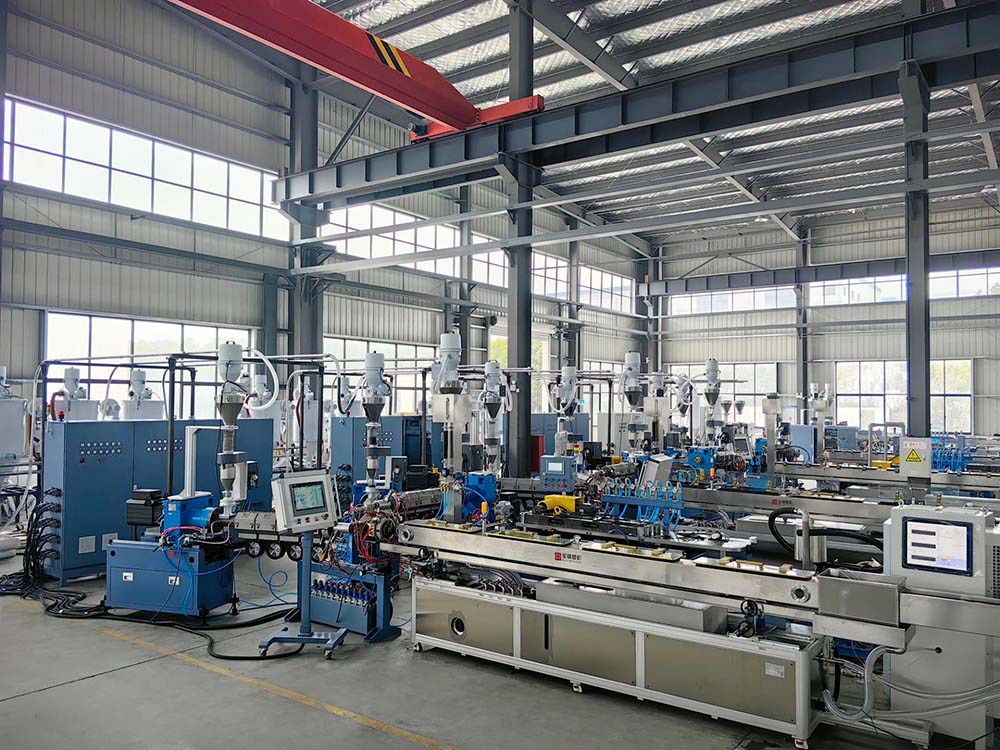
Exploring our compliance protocols for supplying tube extrusion lines to tier-1 automotive suppliers, ensuring traceabilty and reliability for EV thermal management systems.
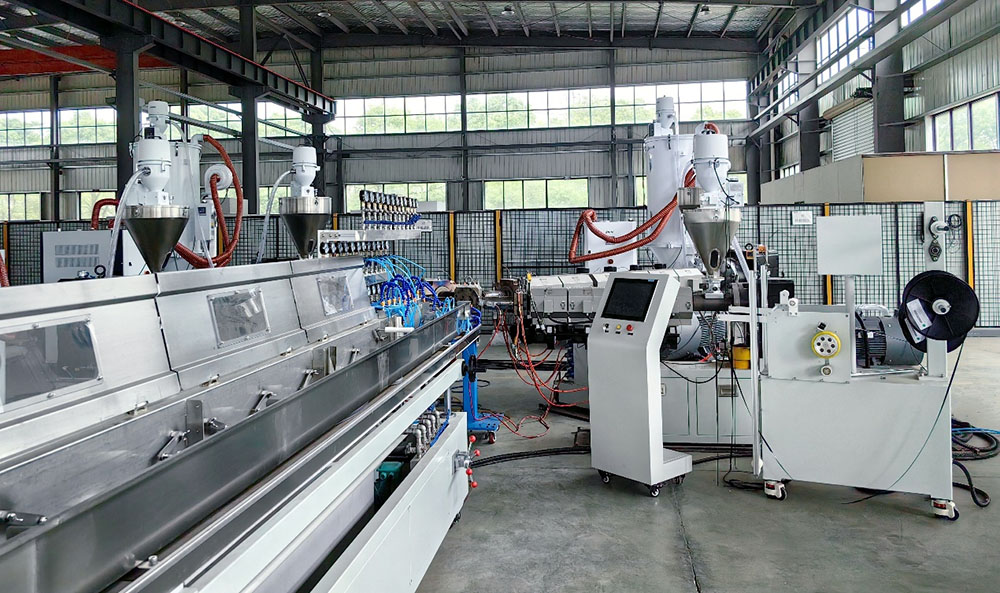
Analyzing automotive door and window sealing strip trends for 2026. BAOD’s automated co-extrusion systems support multi-material profiles with inline cutting and texturing.
 Baodie