Engineered for Boston's aerospace, biotechnology, and marine industrial sectors. Discover high-yield, micro-precision extrusion lines integrated with advanced automation systems.
Boston and the broader Massachusetts region represent one of the most sophisticated high-tech manufacturing ecosystems in the world. Often celebrated for software and biotech, the Greater Boston area—including key industrial nodes like Route 128, Worcester, and the Merrimack Valley—is also a powerhouse for advanced materials engineering, medical device manufacturing, robotics, and defense technologies.
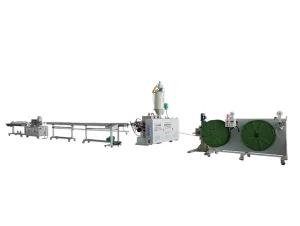
Within this dense industrial matrix, the necessity for high-reliability Coating Extrusion Lines has skyrocketed. Coating extrusion, the process of applying a protective or functional plastic jacket over substrates such as metal pipes, steel wires, multi-lumen catheters, or braided fibers, is essential to key regional industries. For instance, local defense contractors require ruggedized fluoropolymer coatings over steel cables to withstand corrosive marine environments. Meanwhile, Boston's world-leading biomedical firms demand sub-millimeter precision extrusion coatings on micro-catheter guidewires.
"Precision is not just a specification in Greater Boston's supply chain; it is a life-saving requirement. From surgical suites to deep-sea sensor installations, our coating extrusion lines deliver micron-level consistency."
Several critical manufacturing sub-sectors in New England utilize precision polymer cladding:
BAOD EXTRUSION, established in 2002, is a premier designer, manufacturer, and global exporter of high-precision plastic extrusion systems. Building on 25 years of technical expertise originating from Taiwanese design principles, our parent group (KINGSWEL GROUP) expanded fabrication operations into Shanghai in 1999, laying the foundation for our advanced smart-factory ecosystem today in Jiangsu.
We possess a deep focus on developing custom solutions that elevate production output, minimize raw material wastage, and integrate effortlessly with smart digital dashboards.
Consult Our ExpertsIn a globalized manufacturing landscape marked by logistics fluctuations and material shortages, sourcing capital equipment requires more than comparing purchase prices. It demands a thorough evaluation of supply chain resilience, manufacturing compliance, and technological integration. The modern industrial buyer in Boston seeks machinery that reduces operational risks while guaranteeing competitive advantages.
This is where BAOD EXTRUSION’s integration of China Factory 4.0 principles becomes a crucial asset for New England manufacturing firms. Our smart manufacturing facility in Jiangsu does not simply assemble machines; it employs a completely digitalized fabrication network that coordinates production data from CAD blueprints to raw material supply lines, CNC machining, component testing, and finally, international shipment tracking.
By maintaining strategic alliances with top-tier international brands (Siemens, Omron, ABB, Schneider), BAOD ensures that critical mechanical and electrical components are globally interchangeable, making on-site maintenance in Boston straightforward and efficient.
Every coating line runs continuous dry tests and polymer trial runs before shipment. High-precision laser scanners, thermal imaging systems, and melt pressure sensors compile performance charts sent directly to the client for digital verification.
Factory-to-factory direct engineering eliminates secondary distributor markup. This permits Boston buyers to allocate budget toward premium downstream equipment, customized crossheads, or gravimetric control systems.
Additionally, the integration of IoT technology in BAOD extrusion lines supports remote predictive maintenance. Should a Boston-based facility experience issues during system setup or production, our engineers in China can safely log into the PLC control system via secure virtual networks, diagnosing thermal trends, calibrating servo drives, and updating control algorithms in real time. This capability greatly minimizes downtime, ensuring continuous output.
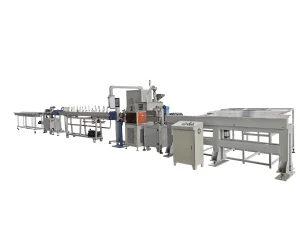
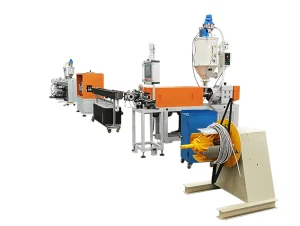
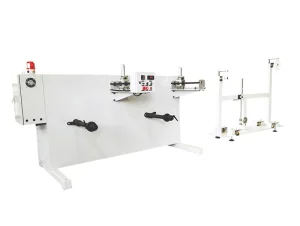
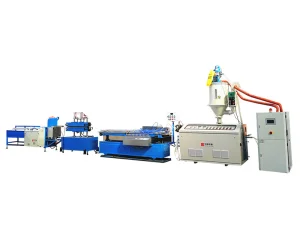
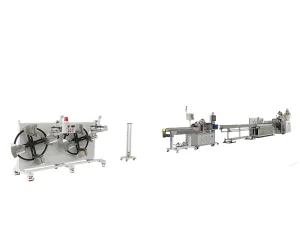
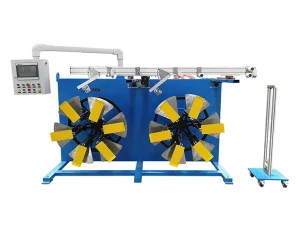
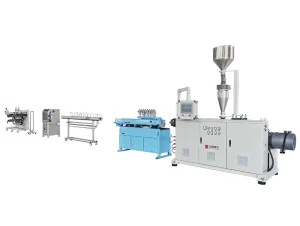
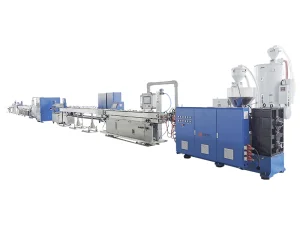
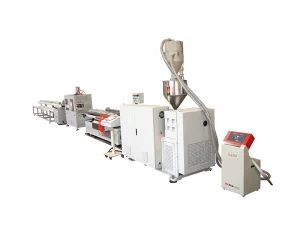
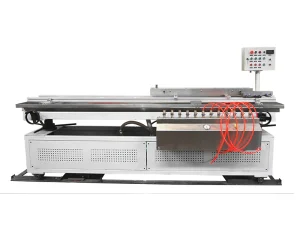
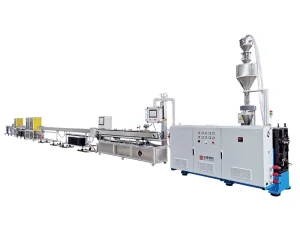
Featuring precision-engineered components, vacuum calibration machinery, and specialty co-extrusion setups suited for varied high-performance applications.
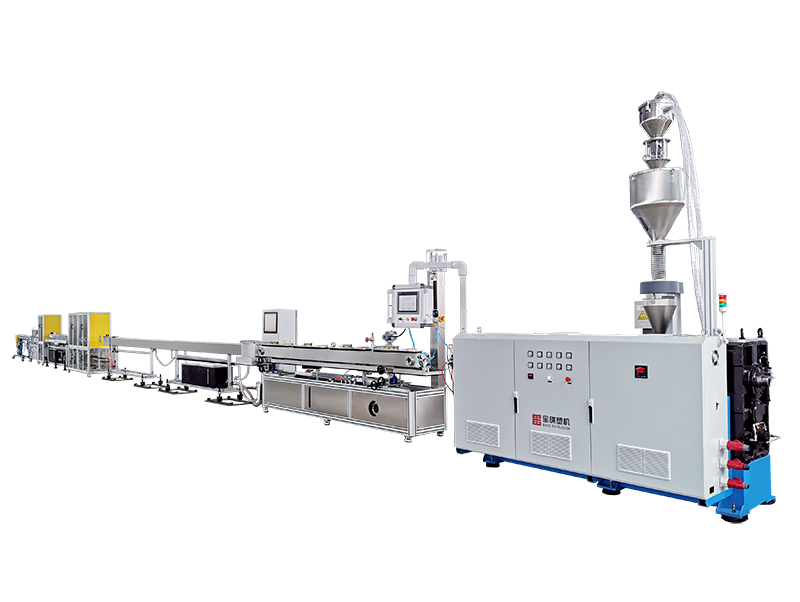
Specially configured for micro-medical catheter tubes and high-pressure automotive brake pipes with micro-tolerance capabilities.
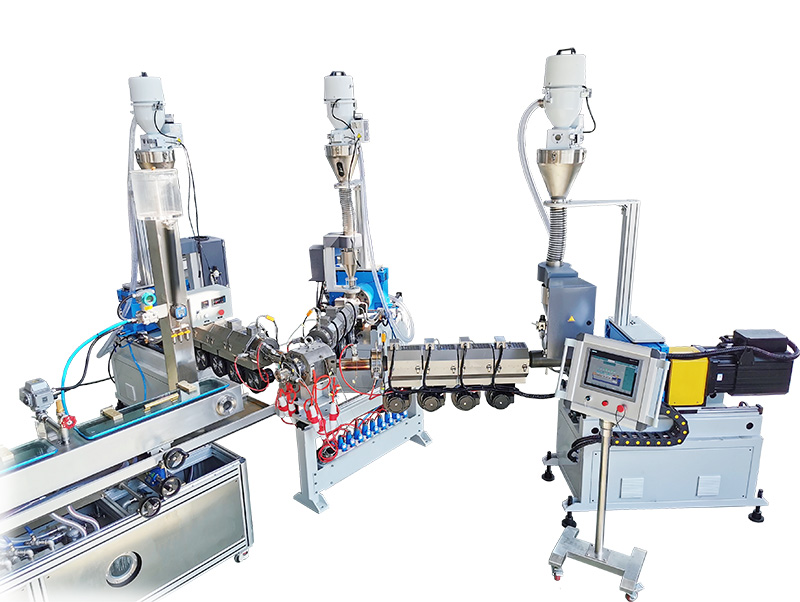
Designed for processing multi-layer functional polymers like PA12, EVOH, and PVDF for fuel system containment.
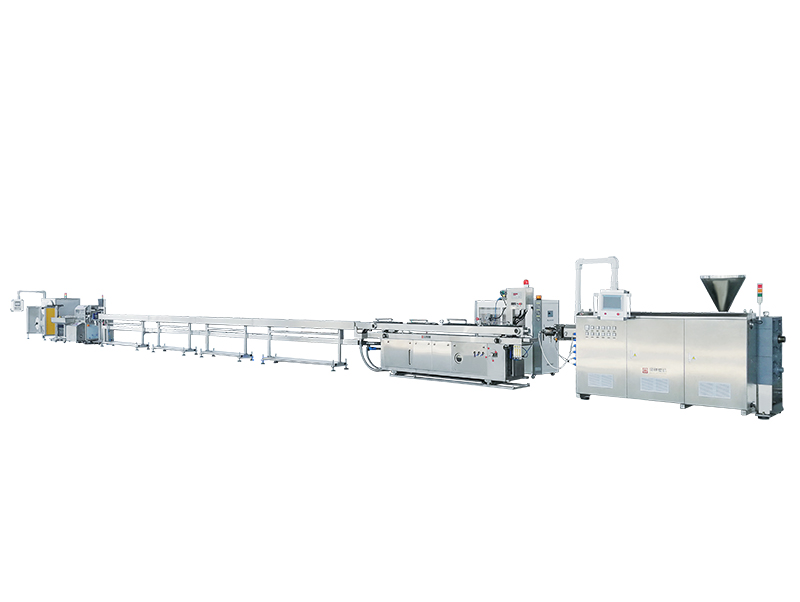
Operates at high line speeds while meeting the stringent clean-room manufacturing standards of clinical applications.
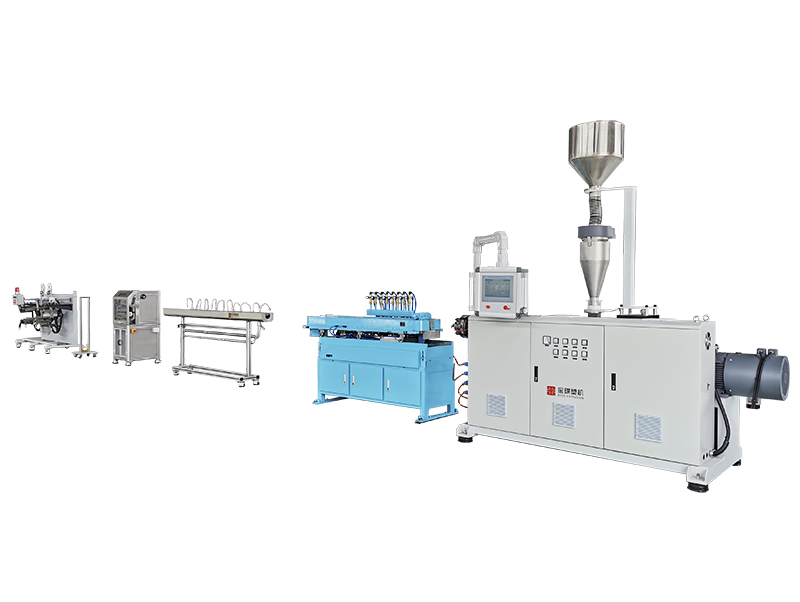
Engineered for high forming speed and uniform corrugation, providing excellent flexibility and structural integrity.
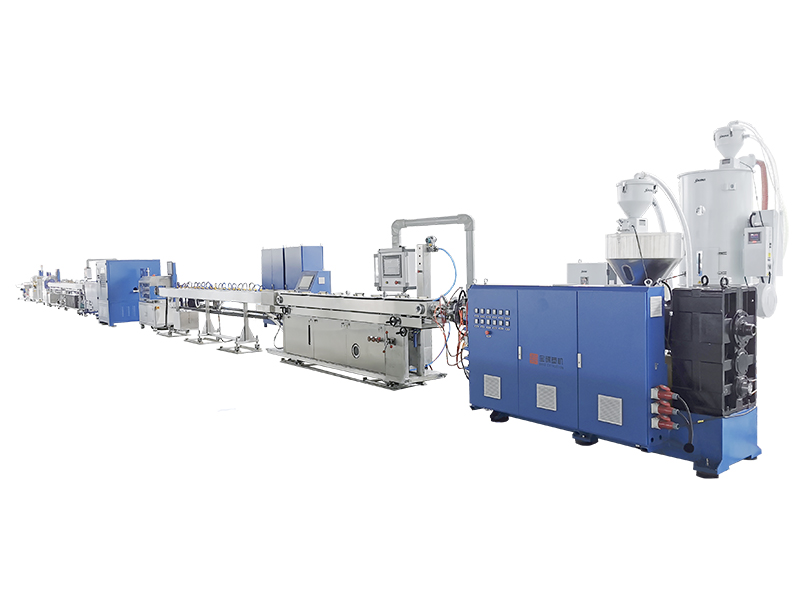
Incorporates high-strength knitting reinforcement layer nested within double-layer TPV thermoplastic vulcanizate extrusion.

Delivers co-extruded multi-material strip products featuring precise tolerances, internal metal inserts, and inline flocking.
A Coating Extrusion Line is a complex assembly of multi-stage thermal and mechanical processing machines that must operate in absolute harmony to achieve micron-range tolerance stability. For Boston industrial buyers, understanding the engineering architecture of these lines is vital when designing systems for high-value applications. The primary components of a standard BAOD coating system include:
The extrusion process starts with plasticizing polymer resin. BAOD uses single-screw extruders featuring L/D (length-to-diameter) ratios optimized between 28:1 and 33:1. This optimized ratio is critical for high-viscosity materials like PEEK, Fluoropolymers (FEP, ETFE), and Thermoplastic Polyurethanes (TPU). A barrier-type screw design ensures that polymer pellets melt uniformly through shear force without causing thermal degradation, which is vital for maintaining the physical characteristics of medical-grade tubing.
The core of the coating process happens in the crosshead die. Here, the metal pipe, steel strand, or braided hose is guided through a precision-machined wire guide. As the substrate passes through the center of the die head, molten polymer is fed uniformly from a peripheral channel, wrapping the substrate in a seamless, concentric jacket. Concentricity is the single most critical factor for wire coating. BAOD utilizes specialized micro-adjustable crosshead dies that allow engineers to calibrate wall thickness concentricity to greater than 95%, mitigating thin spots that could lead to insulation breakdown.
Polymers like PA (Nylon) or UHMWPE contract significantly upon cooling. BAOD designs custom vacuum calibration and cooling tables utilizing multi-stage water systems. Water flow and temperature are controlled to regulate cooling rates, preventing internal stress buildup in the coated jacket. Accurate cooling ensures the coated layer adheres tightly to the metal or fiber core without forming air gaps.
For flexible substrates like steel wire strands or medical braided tubes, maintaining constant tension is critical. BAOD’s Caterpillar-style pullers and belt puller systems (such as the QYP Series) utilize high-torque AC servo drives connected to torque sensors. The system continuously adjusts puller speeds to prevent stretching or deforming the substrate during processing, keeping line speeds stable and output uniform.
Technical Focus: A closed-loop control system integrates the laser outer diameter (OD) measurement gauge directly with the extruder screw speed and puller velocity. If the OD departs from target settings by even ±0.005mm, the PLC automatically recalibrates speeds in real time, minimizing product waste.
Explore authoritative answers to standard questions about importing, customizing, and operating advanced coating extrusion lines in the Boston area.
Keep up with technical developments, manufacturing strategies, and global industry news from the BAOD engineering team.
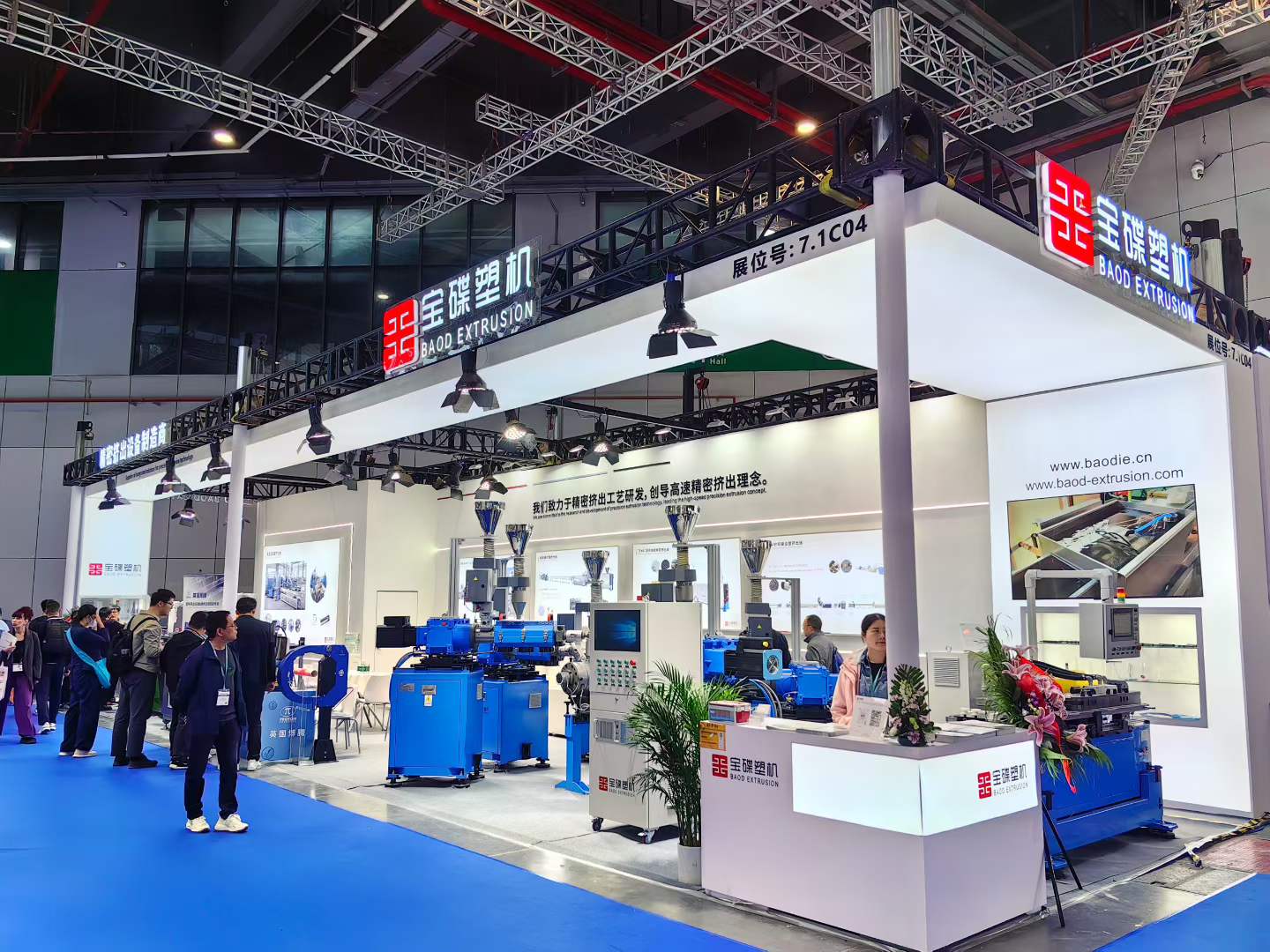
At the National Exhibition and Convention Center, BAOD EXTRUSION presented its latest R&D achievements under the theme "Smart Extrusion, High-Efficiency Innovation", showcasing our smart control interfaces and precision die heads.
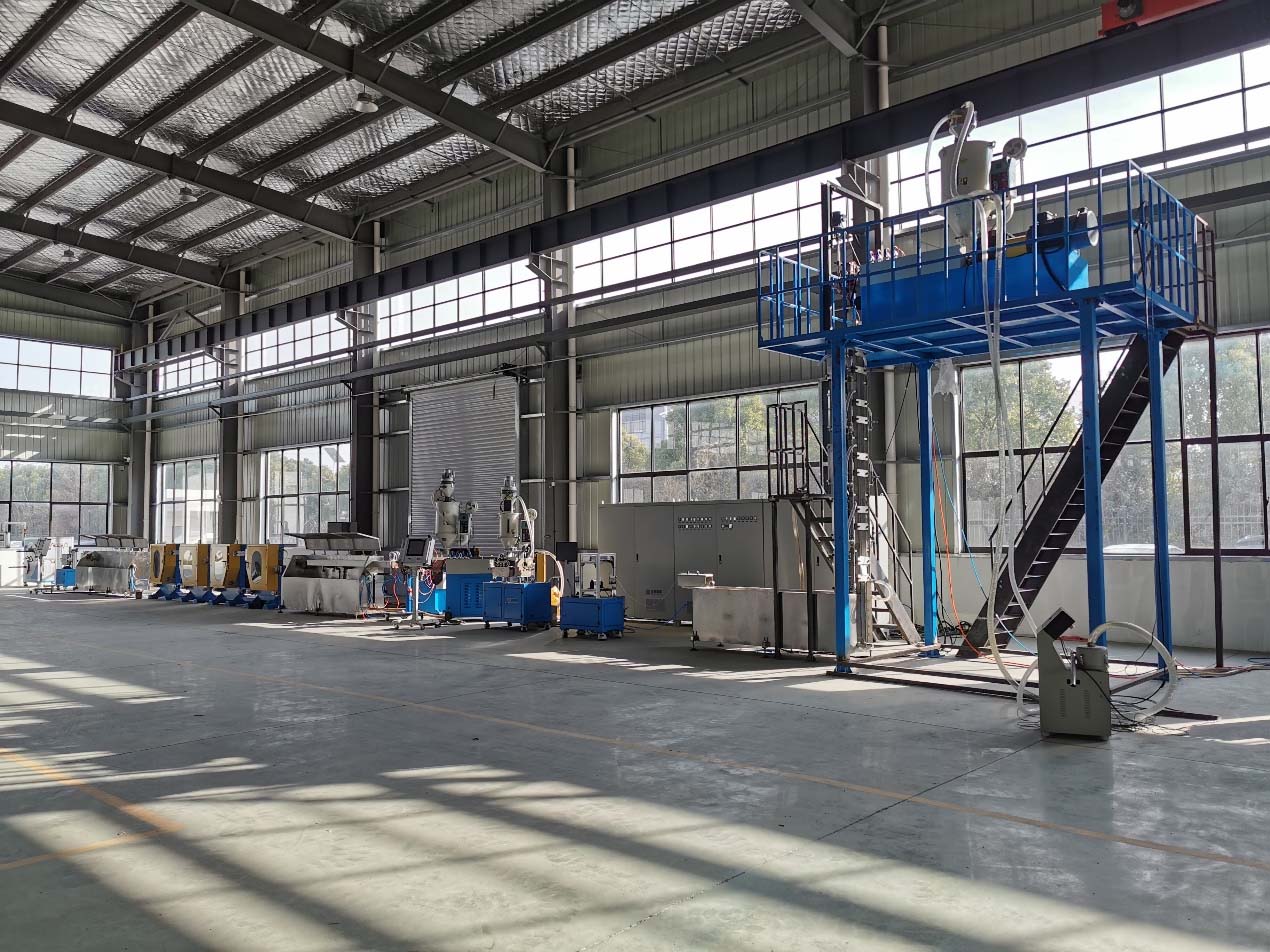
Exploring the precision manufacturing steps of producing detonating tubes used in global infrastructure and mining operations, where consistent micro-dimension control is critical for safety.
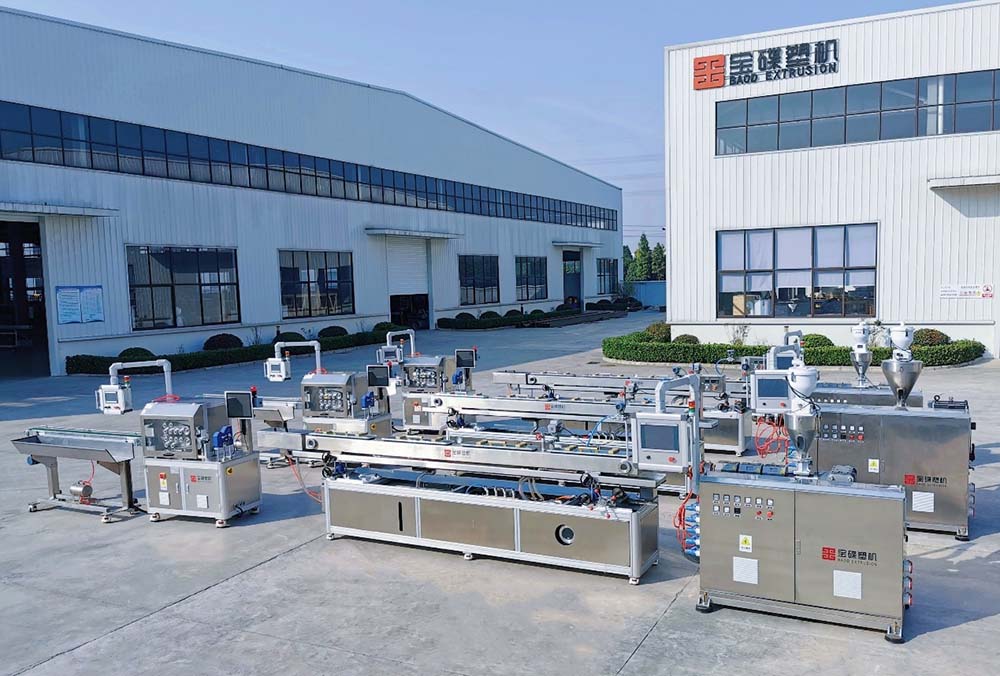
An in-depth analysis comparing manufacturing standards for medical-grade multi-lumen tubing extrusion between Chinese and European production facilities, highlighting tolerances and concentricity control.
We supply a wide range of secondary upstream/downstream equipment, specialized profile tools, and custom co-extrusion setups for global industrial plants.
 Baodie