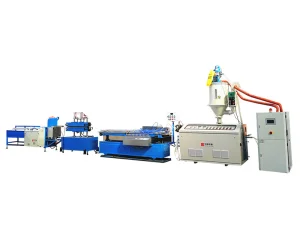
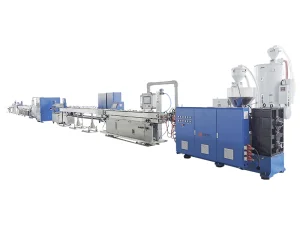
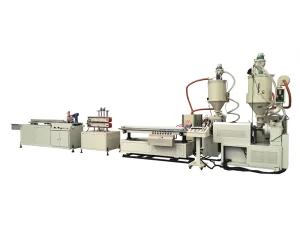
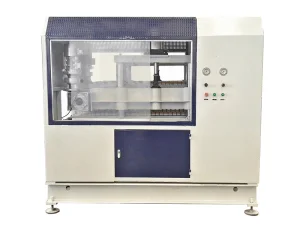
Explore our premium custom plastic profile and pipe extrusion machinery engineered for high capacity, consistent quality, and extreme durability.
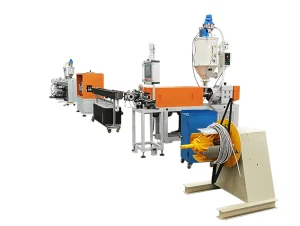
BAOD EXTRUSION (Jiangsu Baodie Automation Equipment Co., Ltd.), founded in 2002, is an industry-leading manufacturer dedicated to the design, research, development, and global supply of high-end plastic extrusion machinery. Rooted in Taiwan's advanced industrial engineering practices, our parent company (KINGSWEL GROUP) leveraged its technical expertise to establish our first heavy manufacturing base in Shanghai in 1999, paving the way for our expansion in Jiangsu.
For more than 25 years, our engineering department has maintained a laser-focus on core extrusion technologies. By choosing BAOD, global enterprises partner with a manufacturer that bridges the gap between cost-efficiency and international performance benchmarks. Our machinery incorporates real-time industrial PLC loops, advanced thermal regulation, and structural safety modules to ensure non-stop manufacturing in high-demand environments.
Our Long-Term R&D Specializations:
Years of R&D and Manufacturing
State-of-the-Art Factory Space
Experienced Engineers & Operators
Our facilities comply with ISO 9001:2015 quality standards and the European Union's CE safety certification. Each HDPE extrusion system undergoes 72 hours of uninterrupted dry-run and stress tests before export, ensuring immediate site commission without delay.
Why modern infrastructure projects, municipal planning committees, and chemical plants are accelerating their transition from legacy steel and PVC lines to advanced, co-extruded HDPE systems.
The global demand for High-Density Polyethylene (HDPE) pipes has reached unprecedented heights. As municipalities and utility providers globally grapple with aging water distribution networks, structural shifts, and environmental stressors, HDPE has emerged as the definitive material of choice. According to market research, the global HDPE pipe market is growing at a compound annual growth rate (CAGR) of over 6.2%, driven by municipal investments in clean drinking water, large-scale agricultural irrigation projects, telecommunication fiber optical micro-duct conduits, and mining operations.
Historically, legacy pipe materials like iron, concrete, and PVC dominated municipal and heavy industries. However, these traditional pipelines present major long-term issues: concrete degrades under chemical attack, cast iron experiences structural corrosion leading to severe water leakage, and PVC is highly brittle and vulnerable to seismic shifts. HDPE pipes, conversely, offer zero leak rates due to thermal butt-welding fusion, a lifespan exceeding 100 years, and exceptional chemical immunity. To supply these pipes efficiently, global manufacturers require advanced HDPE pipe extruder machines capable of running high-molecular-weight raw material at stable extrusion pressures and consistent linear speeds.
Potable water lines require strict hygiene certifications and pressure retention. Our custom extruders ensure optimal material mixing, preventing microscopic voids or stress fracture points inside the pipe wall.
Multi-layer gas conduits rely on polyamide (PA) barrier layers co-extruded with HDPE to eliminate gas permeability. Precision control of melt temperatures prevents thermal degradation of adhesive tie-layers.
Telecommunications infrastructure demands small-diameter, high-speed single-wall or multi-channel corrugated pipes to house fragile fiber optic cables, requiring exact tension calibration and puller synchronization.
A comprehensive engineering breakdown detailing how our custom plastic extrusion machinery guarantees consistent melt delivery, sizing, and automated downline processing.
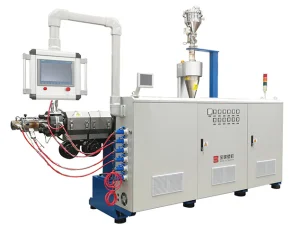
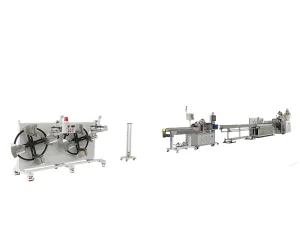
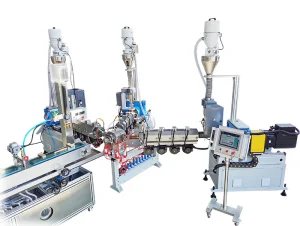
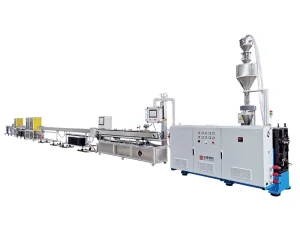
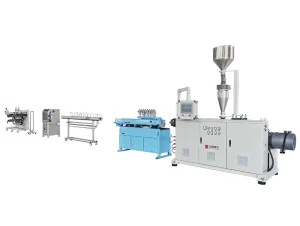
The core of our HDPE pipe plant is the SJ Series single-screw extruder. High-density polyethylene features high molecular weight and high melt viscosity, which can lead to excessive shear heat during processing. To counter this, BAOD customizes screw flight designs with an L/D ratio of 33:1 or 38:1. This guarantees absolute homogenization at lower temperatures, reducing polymer chain degradation.
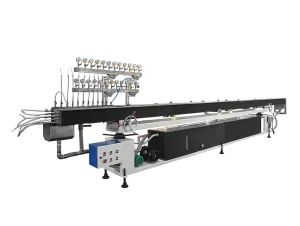
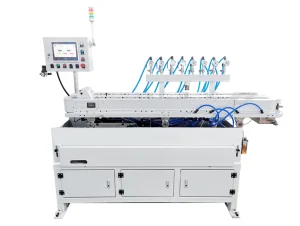
Post-die extrusion, the molten polymer sleeve must be instantly formed to avoid collapse. The vacuum calibration spray cooling tank provides a high-vacuum chamber that forces the expanding profile against a custom-sized sleeve insert. Dual-loop water filtration and layout-configured spray nozzles apply a 360-degree curtain of chilled water to rapidly transition the plastic structure from melt to solid state.
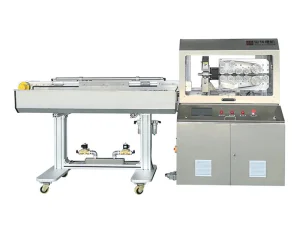
Any fluctuation in pulling speed will cause thickness variations along the pipe. The TKC Series Crawler-Type and QYP Series Belt Pullers utilize multi-stage caterpillar belts or dynamic poly-v belts driven by servo motors. This provides uniform friction distribution without crushing the pipe wall, synchronized through a closed-loop system connected directly to the primary extruder speed controller.
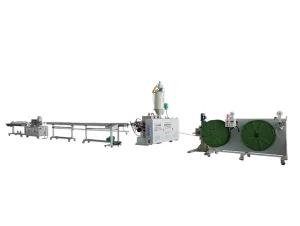
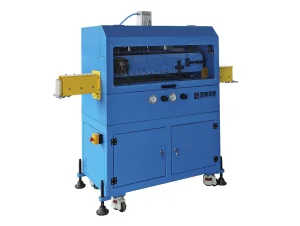
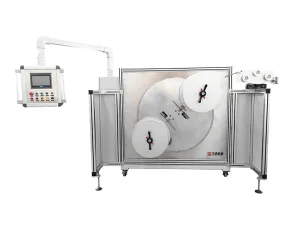
Clean cutting and organized coiling are vital for final packaging and automated downline logistics. Our line ends with high-speed planetary cutters or precise fly-knife cutting systems that deliver zero-burr cuts. For flexible pipes and microducts, the BAOD Precise Traverse Displacement Auto-Spool Changing Coiling Machine automates winding patterns to avoid cable overlaps and twisting.
Procuring capital equipment for plastic extrusion involves analyzing long-term Total Cost of Ownership (TCO). Chinese manufacturing has evolved past basic pricing advantages to lead in integrated supply chain efficiency, advanced materials testing, and mechanical engineering flexibility. At BAOD EXTRUSION, we combine specialized design principles with the agility of Chinese industrial infrastructure.
Our proximity to world-class steel fabrication hubs, electrical component suppliers, and precision gearbox manufacturing facilities allows us to source raw machine parts, configure custom extrusion lines, and complete pre-shipment testing in half the time of Western European competitors. Furthermore, we customize layouts for factory floors, raw material conveying lines, and plant cooling networks, adapting each machine to our clients' regional power grids and operational constraints.
Our system designs prioritize global compliance. We maintain high international manufacturing compliance standards by equipping all machines with CE-certified wiring, robust safety interlocks, and standard industrial components from globally recognized brands like Siemens, Omron, Schneider, and ABB. This ensures parts are easily sourcable and maintainable by on-site technicians anywhere in the world.
A technical guide to the mechanical, digital, and structural trends shaping the plastic pipe manufacturing sector over the next decade.
Modern raw material pricing requires minimal waste. Gravimetric dosing systems dynamically adjust screw speed based on real-time mass flow feed weight, maintaining structural wall thickness despite fluctuating polymer bulk densities.
Manufacturers utilize co-extrusion die heads to produce multi-layer pipes. This allows the core layer to integrate recycled regrind to lower material cost, while virgin material forms the internal and external surfaces to protect chemical and pressure ratings.
Extrusion lines are increasingly monitored by central OPC-UA servers. Operating metrics including melt temperature, zone-by-zone electrical current draw, vacuum level, and cooling flow rate are logged for continuous quality audits.
Expert insights regarding setup, operation, and maintenance of high-performance HDPE pipe extrusion equipment.
For standard HDPE material, an L/D (length-to-diameter) ratio of 30:1 to 33:1 is recommended. For high-speed lines or systems using high molecular weight PE (like PE100) or multi-layer co-extrusion with barriers, an L/D ratio of 38:1 provides superior results. The longer screw length ensures uniform shear mixing and masterbatch dispersion, lowering melt temperature variation at the die entrance to prevent structural weaknesses.
We achieve strict wall concentricity through three design features: first, spiral mandrel die head channels that distribute polymer melt evenly; second, precise gravimetric feeding systems that adjust output based on weight-per-meter readings; and third, multi-zone vacuum calibration sizing chambers that prevent soft profiles from warping under gravity before cooling.
Yes. Our custom-designed screws can be customized with venting zones to release moisture and volatile gases common in recycled materials. Additionally, we integrate automatic hydraulic double-column screen changers to filter out micro-particles, preventing downtime for filter replacements.
Sudden temperature changes during water cooling create internal stresses in the pipe wall, lowering its burst pressure rating and environmental stress cracking resistance (ESCR). Our cooling tanks use proportional water bypass loops and independent temperature sensors to maintain cooling zones within ±1°C of the target temperature.
We provide full commissioning support: our engineers travel to the installation site to manage assembly, complete connection integration, run material testing, and train local operators. Additionally, every machine features remote monitoring modules for our technical team in China to assist with maintenance online.
Stay updated on advanced plastic manufacturing processes, industry compliance guidelines, and recent exhibition updates.
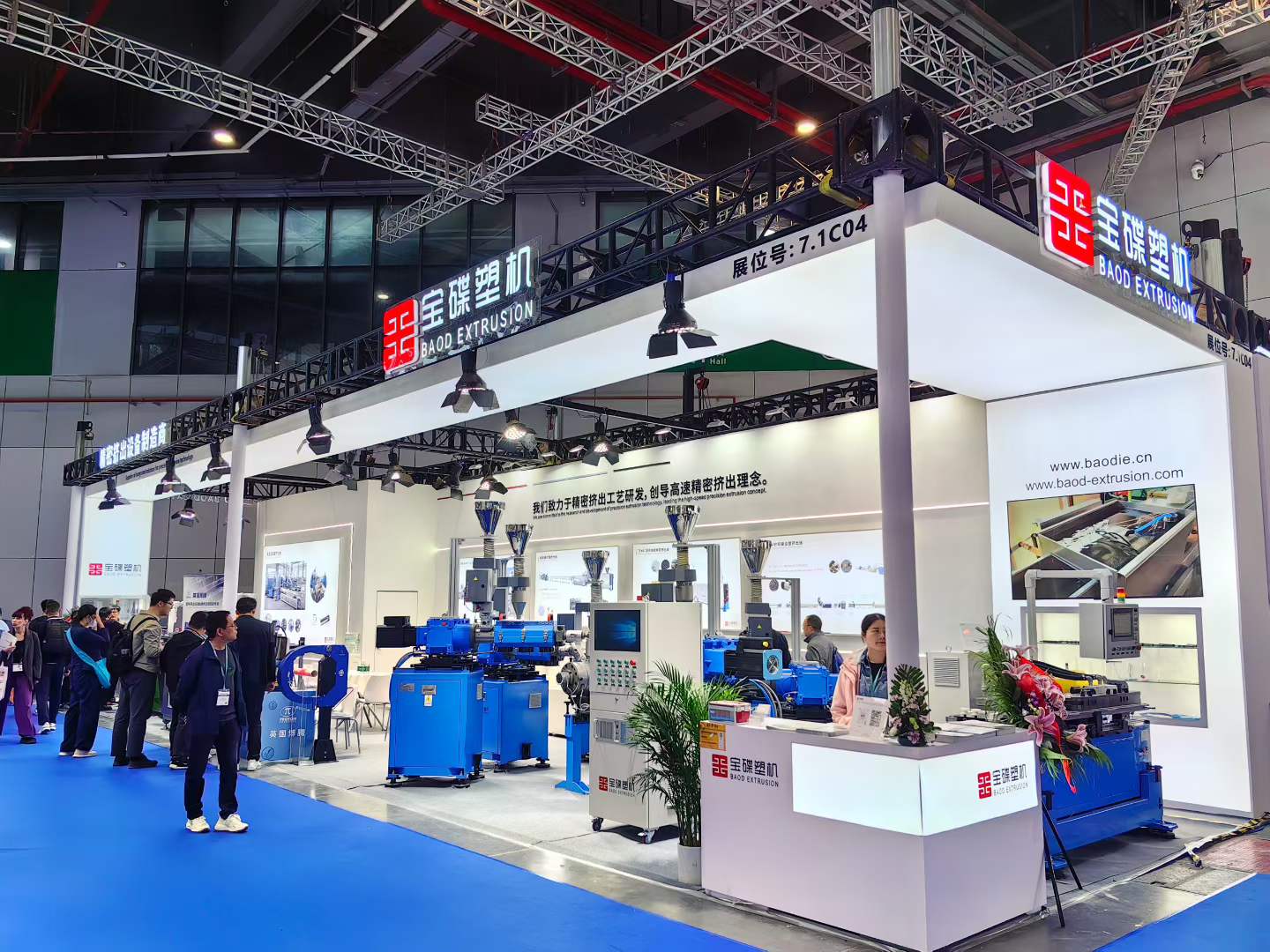
From April 21–24, CHINAPLAS 2026 was successfully held at the National Exhibition and Convention Center in Shanghai. BAOD EXTRUSION presented "Smart Extrusion & High-Efficiency Innovation" solutions...
Read Article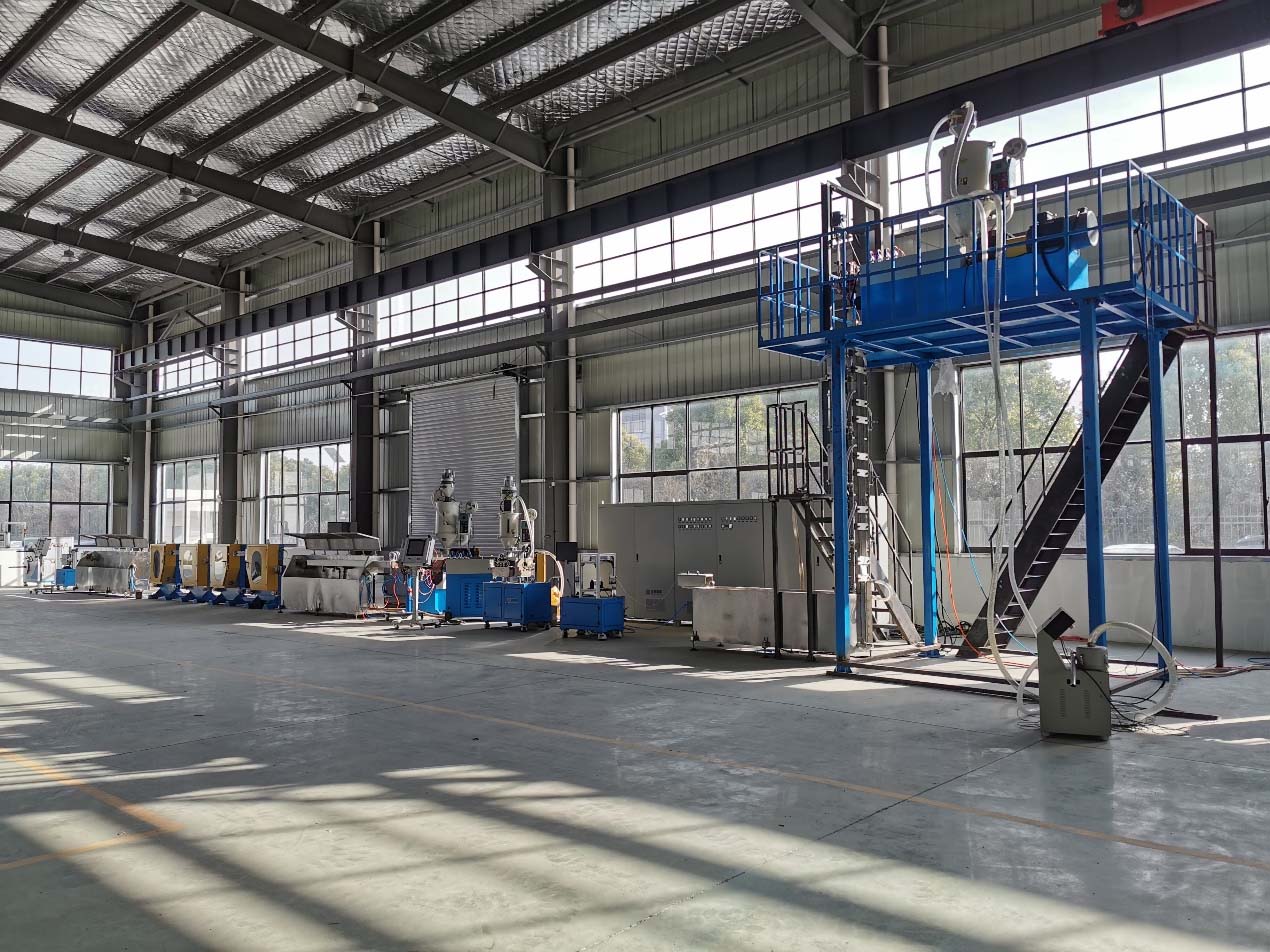
In sectors ranging from mining to infrastructure demolition, the detonating tube requires high structural precision. BAOD's custom lines ensure strict dimensional tolerance...
Read Article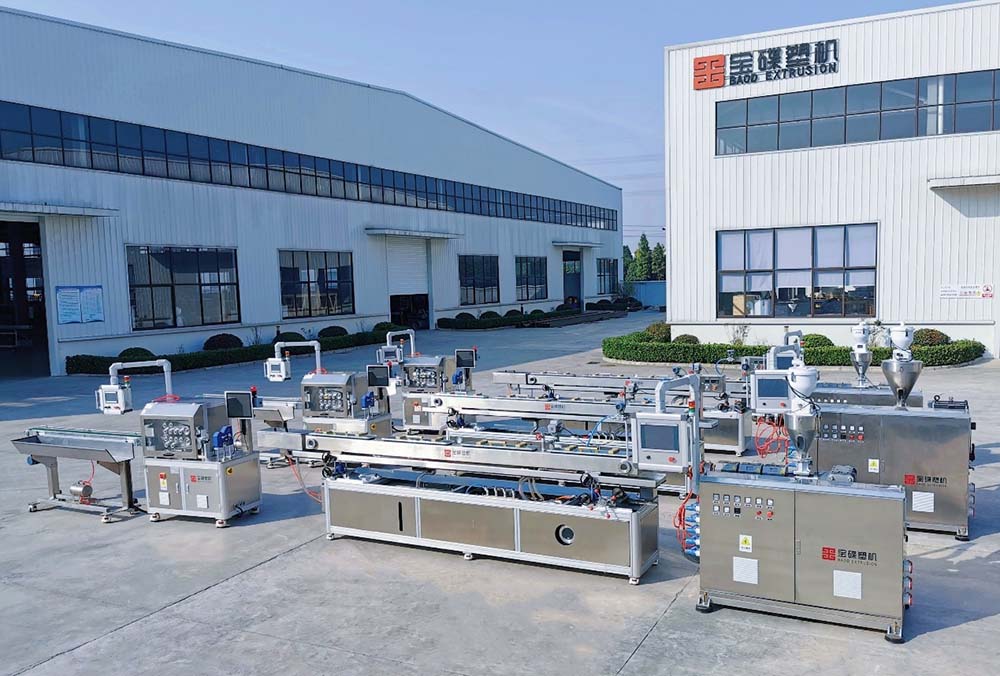
Analyzing the technical differences in design parameters, thermal management, and precision alignment between modern Chinese production equipment and European standards...
Read ArticleDiscover our range of secondary calibrators, high-speed pullers, and specialized co-extrusion auxiliary equipment designed to expand your plant's production versatility.
 Baodie